Female ejaculation sits at the intersection of anatomy, physiology, pleasure, and persistent cultural myths—yet modern research has brought increasing clarity to what it is, how it happens, and why it varies so widely between individuals. If you’ve ever wondered whether “squirting” is real, whether it’s just urine, or what the science actually shows about the fluids involved, this deep dive will give you an evidence-based, practical understanding without the shame, confusion, or hype.
Understanding Female Ejaculation: A Comprehensive Overview of the Science
Female ejaculation generally refers to the expulsion of fluid from the urethra during sexual arousal, stimulation, or orgasm in some people with vulvas. It’s important to separate three concepts that are often conflated:
1) Lubrication (vaginal wetness): primarily produced by the vaginal walls and cervix, and also contributed to by vulvar glands. This fluid is not expelled forcefully from the urethra.
2) Female ejaculation (FE): classically described as a smaller volume of milky or opalescent fluid associated with the paraurethral (Skene’s) glands and ducts, exiting via the urethra.
3) “Squirting”: typically a larger-volume expulsion of clear fluid through the urethra, which research suggests often contains a substantial urinary component. It can occur with or without orgasm.
These categories are useful because they map onto different anatomical sources and different fluid characteristics. But real life can be messier: the fluids can mix, volumes can vary, and subjective experience doesn’t always match the neat boxes.
Another key point: female ejaculation is not a requirement for orgasm, nor is orgasm required for fluid expulsion. Some people ejaculate with orgasm; others experience large-volume expulsion without orgasm; many orgasm without any noticeable fluid release. None of these patterns indicates “better” sex, healthier anatomy, or superior technique. They’re simply variations.
So why is this topic still confusing? Partly because research is complex: measuring fluid volumes, identifying sources, and analyzing composition requires careful methods. Partly because cultural narratives—porn scripts, misinformation in sex education, and stigma about bodily fluids—shape expectations. Science provides a more grounded lens: this is a physiological phenomenon with multiple pathways and a wide normal range.
Historical Perspectives and Cultural Differences in Female Ejaculation
Descriptions of female-emitted sexual fluids are not new. Historical medical texts, erotic literature, and philosophical writings across different regions have referenced women releasing fluid during intense arousal. Yet these accounts have been interpreted radically differently depending on cultural context and prevailing theories about bodies.
In some historical traditions, female sexual fluid was framed as an analogue to male semen—a “female seed”—and sometimes tied to fertility theories that have since been replaced by modern reproductive science. In other eras, it was dismissed as pathology or moralized as evidence of excess desire. The same physical event could be celebrated, stigmatized, or ignored.
Cultural differences still matter today because they influence whether people even notice or report female ejaculation. If a culture frames sexual fluids as dirty or shameful, a person may suppress it, hide it, or interpret it as “something went wrong.” If a culture (or subculture) frames it as a marker of elite pleasure, people may feel pressured to produce it—or anxious if they don’t.
Modern pornography has added another layer: it can portray “squirting” as a universal, repeatable outcome that happens on cue with certain techniques. For many viewers, that becomes a default expectation. But research and clinical experience point to a more nuanced reality: some bodies eject fluid easily, some rarely do, and for many it’s highly context-dependent.
Separating physiology from performance culture is one of the most helpful steps for sexual wellbeing. A question worth asking is: Am I curious about how my body works, or am I chasing a script that someone else wrote?
The Biological Mechanisms: What Science Says About Female Anatomy and Physiology
To understand female ejaculation scientifically, you need a clear map of the structures involved and how arousal changes them.
The urethra and bladder: The urethra is the tube that carries urine out of the body from the bladder. During sexual arousal, pelvic blood flow increases, tissues swell, and muscles in the pelvic floor and surrounding structures shift in tone. These changes can influence sensations around the urethra and can contribute to the expulsion of fluids.
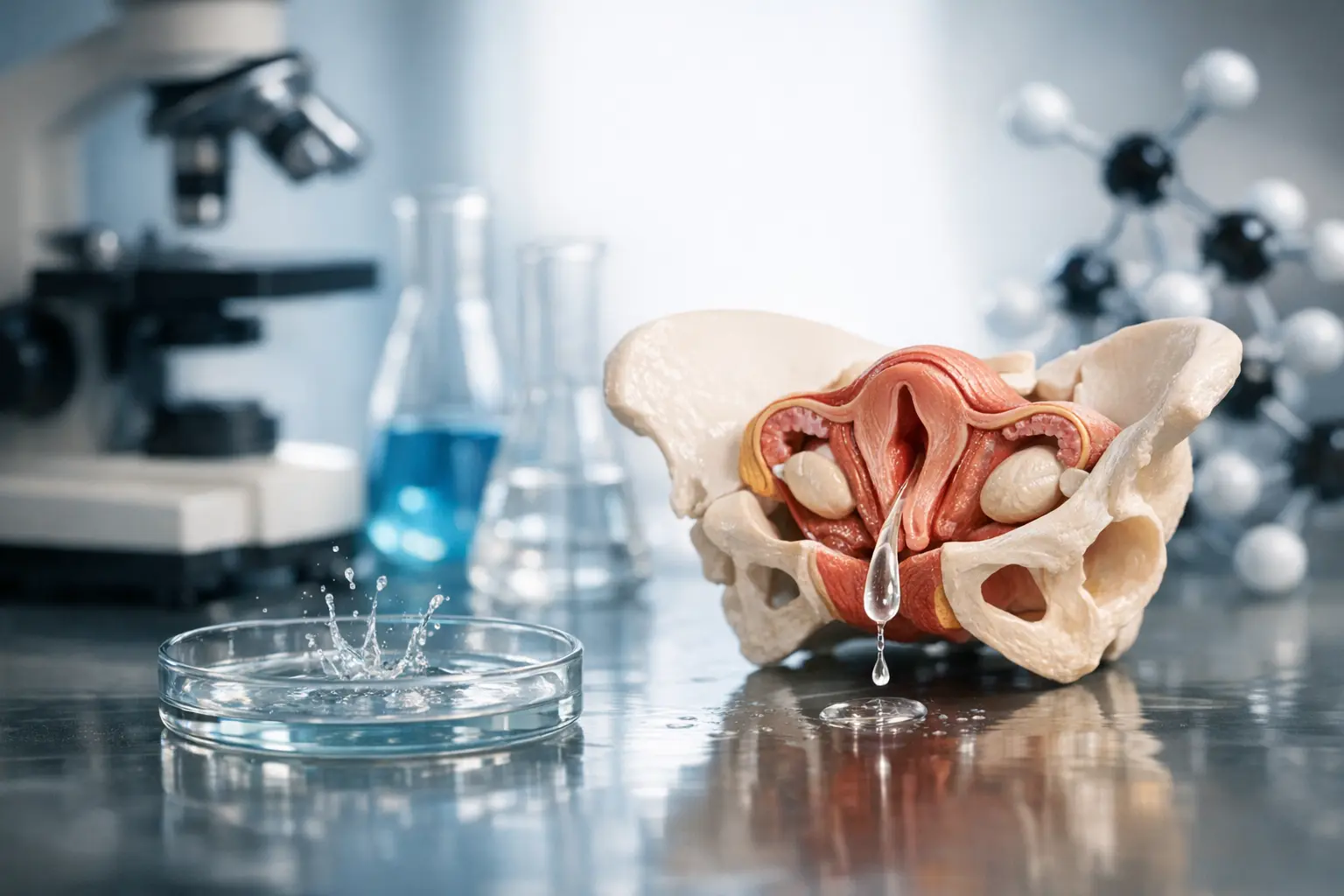
Paraurethral (Skene’s) glands: These are small glands located near the urethra, often described as homologous (developmentally comparable) to the prostate in people assigned male at birth. They drain through ducts opening near the urethral meatus. When active, they can produce fluid that may contribute to female ejaculation.
The “G-spot” and internal clitoral network: What many call the G-spot is best understood as a region rather than a discrete organ. The anterior vaginal wall sits near the urethra, bladder, and paraurethral tissues, and it’s also adjacent to internal portions of the clitoris and erectile structures. Stimulation in this area can indirectly stimulate multiple structures at once—clitoral tissue, urethral sponge, and paraurethral glands—so it’s not surprising that fluid expulsion can be associated with this kind of stimulation.
Pelvic floor muscles: Rhythmic contractions of pelvic floor muscles and surrounding tissues occur during orgasm for many people. Those contractions can increase pressure and facilitate expulsion of fluid through the urethra. Importantly, similar contractions can also occur during intense arousal without orgasm.
Why “it feels like I need to pee” can happen: Many people report a strong urge-to-urinate sensation before squirting or during certain types of internal stimulation. Anatomically, this makes sense: the bladder and urethra are being compressed and stimulated. The presence of that sensation doesn’t necessarily mean the person is about to involuntarily urinate in a way that signals loss of control or dysfunction—it may be part of the pathway that leads to fluid release.
In practical terms, the body near the urethra is part of a tightly packed neighborhood. Pressure, arousal-induced swelling, and muscle contractions can cause fluids from different sources to be expelled via the same exit (the urethra). That’s one reason debates about “what it is” can become overly simplistic.
Research Findings: Key Studies on Prevalence, Composition, and Characteristics of Female Ejaculation
Scientific research on female ejaculation faces a basic challenge: definitions. When studies don’t clearly separate lubrication from female ejaculation or from large-volume squirting, prevalence numbers can swing widely.
Prevalence: Across research and clinical reports, a meaningful minority of women report experiencing some form of urethral fluid expulsion during sex, while many do not. Prevalence estimates vary due to differences in sampling (general population vs. sexually experienced volunteers), measurement (self-report vs. laboratory observation), and terminology. The most reliable takeaway is not a single percentage, but this: female ejaculation and squirting are real phenomena, not universal, and not rare enough to be considered abnormal.
Volume and appearance:
- Female ejaculation (smaller volume) is often described as whitish, opalescent, or slightly viscous.
- Squirting (larger volume) is typically clear and can be produced in volumes that exceed what most people expect from glandular secretion alone.
Composition: Research analyzing expelled fluids frequently identifies different profiles:
- Paraurethral-gland-associated markers may appear in some samples, supporting the idea that Skene’s glands can contribute to ejaculatory fluid.
- Urinary components are often present, especially in large-volume “squirt” events, which helps explain the clear appearance and higher volumes.
This is where many popular debates get stuck: “Is it urine or not?” The research-informed answer is: sometimes both. A large-volume expulsion is frequently similar to diluted urine in composition, while smaller ejaculatory fluid may show markers suggestive of paraurethral gland secretion. And in real sexual events, mixing is plausible.
How can large volumes happen? The bladder is the most obvious reservoir capable of producing substantial volume. During arousal and stimulation, the bladder can be partially emptied, refilled over time, and pressure dynamics can shift. That doesn’t mean squirting is “just peeing” in the everyday sense—because the context, triggers, and subjective experience can be distinct—but it does mean the urinary system is often involved.
Imaging and observation insights: Studies that use imaging methods during sexual stimulation have provided additional plausibility: the bladder can change in size and position, and fluid can be expelled through the urethra during orgasm or intense stimulation. While methods differ, the overall pattern supports a mixed-origin model rather than a single, universal source.
Characteristics and triggers: Many people who report squirting describe it as more associated with sustained internal stimulation of the anterior vaginal wall, combined with high arousal and relaxation. Others report it more with external clitoral stimulation. That variability aligns with anatomy: multiple structures can be activated, and the nervous system’s arousal response is highly individual.
The most clinically relevant research finding is not about “proving” a single explanation—it’s that variability is the norm. Bodies differ in gland size, ductal anatomy, sensitivity, pelvic floor tone, hydration status, comfort, and psychological context. Scientific honesty means resisting one-size-fits-all claims.
Debunking Myths: Common Misconceptions and the Impact on Sexual Health and Wellness
Myths about female ejaculation don’t just spread misinformation—they can create real distress, shame, and relationship conflict. Clearing them up has practical value.
Myth 1: “If you didn’t squirt, you didn’t really orgasm.”
Orgasm is a complex neurophysiological event involving the brain, pelvic nerves, and muscle contractions. Fluid expulsion may accompany it, but it’s not a requirement. Many people have intense orgasms without any ejaculation or squirting. Equating orgasm with squirting turns pleasure into a performance metric.
Myth 2: “Squirting is always fake.”
Some media depictions are staged or exaggerated, but the phenomenon itself is well documented. Dismissing it entirely undermines people’s lived experience and pushes the topic back into secrecy.
Myth 3: “Squirting is always just urine, so it’s gross.”
Large-volume squirting often contains urinary components. That doesn’t make it “gross”; it makes it physiological. Urine is sterile when it leaves the bladder in most healthy individuals (though not always), and sexual activity already involves a variety of normal bodily fluids. The more useful question is: Is everyone consenting, comfortable, and practicing good hygiene?
Myth 4: “If you squirt, you must have weak pelvic floor control.”
Squirting is not a diagnostic sign of pelvic floor dysfunction. Pelvic floor tone and coordination vary, and some people with very strong pelvic floors squirt; others with laxity do not. If someone has urinary leakage in non-sexual contexts or distressing incontinence, that’s a different conversation best addressed with a clinician.
Myth 5: “You can train anyone to squirt with the right trick.”
Techniques can increase the likelihood for some, but bodies aren’t identical. Pressure to “achieve” squirting can backfire by increasing anxiety and muscle guarding, which reduces arousal and comfort. A better goal is expanded pleasure and body knowledge, not a specific outcome.
Myth 6: “Something is wrong if fluid comes out.”
For many, it’s normal. However, it’s wise to know when to seek medical advice: pain, burning, strong foul odor, blood, fever, or new urinary symptoms warrant evaluation. Pleasure should not come with unexplained pain or fear.
These myths have real wellness consequences. People may avoid intimacy, tense up during arousal, or feel embarrassed about wetness. Partners may react poorly out of surprise. Education reframes it: this is a known variation of sexual response, and it can be handled with straightforward preparation and communication.
Practical Insights: Enhancing Experiences and Communication Around Female Ejaculation in Sexual Relationships
Science is most useful when it improves real lives. Whether you’re hoping to explore ejaculation, you’ve experienced it unexpectedly, or you want to be a supportive partner, the practical essentials boil down to consent, comfort, and curiosity.
1) Normalize the conversation before clothes come off
If squirting or ejaculation has happened before, mention it outside of sexual heat. Keep it simple:
- “Sometimes I release a lot of fluid when I’m really turned on. Are you comfortable with that?”
- “If it happens, it’s normal for me—not a problem. I just want us to be prepared.”
This reduces the odds of a partner reacting with shock—which is one of the fastest ways to trigger shame.
2) Consent includes fluids
Some people love it; some people don’t. Consent means you’re both on board with the possibility, including where it might land. If a partner is uncertain, treat that as valid information, not a challenge to overcome. You can always adjust activities.
3) Practical preparation removes performance pressure
If you want to relax into the experience, remove the “mess anxiety”:
- Lay down a towel or a washable waterproof pad.
- Keep wipes nearby (fragrance-free is usually best for vulvar comfort).
- Consider a routine: pee beforehand if that helps reduce anxiety about the urge sensation.
Preparation is not admitting something is embarrassing; it’s simply being smart.
4) Pay attention to the “urge to pee” signal—without panicking
For some, that sensation is a reliable sign they’re approaching a release. If the person wants to explore squirting, experimenting with relaxing into that sensation can help. If they do not want it, changing position, reducing anterior wall pressure, or shifting stimulation style can reduce the trigger.
5) Technique: think in terms of arousal systems, not single magic spots
Because the clitoral network, urethral sponge, and paraurethral tissues are interconnected, many people respond best to blended stimulation:
- Start with external clitoral arousal to build comfort and lubrication.
- Add internal stimulation gradually, focusing on what feels pleasurable rather than what you think “should” cause a result.
- Use consistent rhythm and moderate pressure; sudden, intense force can create guarding instead of release.
If you’re a partner using fingers, think “come-hither” motions along the anterior vaginal wall, but keep checking in. If you’re using toys, choose smooth, body-safe materials and start smaller if the person is sensitive.
6) Pelvic floor: relax first, then intensify
A common misconception is that stronger contraction always helps. In reality, involuntary release tends to occur when the nervous system feels safe and the pelvic floor can alternate between engagement and relaxation. If someone is anxious, cold, rushed, or self-conscious, the pelvic floor often tightens protectively.
Helpful strategies include slower buildup, more foreplay, warmer environment, supportive positioning (hips elevated with a pillow), and unhurried touch. Breathing matters more than most people realize: long exhales can reduce guarding and increase sensation.
7) Aftercare and framing: make it emotionally safe
If ejaculation or squirting happens, the partner response can shape whether it becomes a positive memory or a shame trigger. Reinforcing phrases include:
- “That was hot—are you okay?”
- “I love seeing you feel good.”
- “Want a towel or water?”
Avoid reacting with disgust, surprise, or interrogation (“Was that pee?”). If you’re curious about what happened, ask later in a neutral tone.
8) When to loop in healthcare
If someone is unsure whether fluid release is ejaculation, urine leakage, or something else, a clinician can help—particularly if there are symptoms like pain, recurrent UTIs, strong odor, blood, or leakage that occurs outside sexual contexts. Pelvic floor physical therapists are especially helpful for people dealing with either excessive tension (pain, difficulty relaxing) or true incontinence.
Ultimately, the best “enhancement strategy” is to treat female ejaculation as a possible feature of pleasure, not a test to pass. When people feel safe, unjudged, and listened to, their sexual response tends to become more flexible and satisfying—whether or not fluid is part of it.
Conclusion
Female ejaculation is a real, biologically grounded phenomenon involving the urethra, paraurethral (Skene’s) glands, pelvic floor dynamics, and the broader arousal system. Research suggests that smaller-volume ejaculatory fluid can reflect paraurethral gland secretions, while larger-volume “squirting” often includes a significant urinary component—an anatomical reality that doesn’t negate pleasure or legitimacy. The most consistent scientific conclusion is also the most freeing: variation is normal. Some people ejaculate or squirt easily, some occasionally, and many never do, with no bearing on orgasm quality or sexual health.
When myths are replaced by accurate physiology, the focus shifts from performance to wellbeing. With practical preparation, consent-forward communication, and a curiosity-driven approach to stimulation, couples can navigate female ejaculation confidently—turning what’s often treated as a confusing mystery into just another understood, manageable, and potentially enjoyable part of human sexual response.