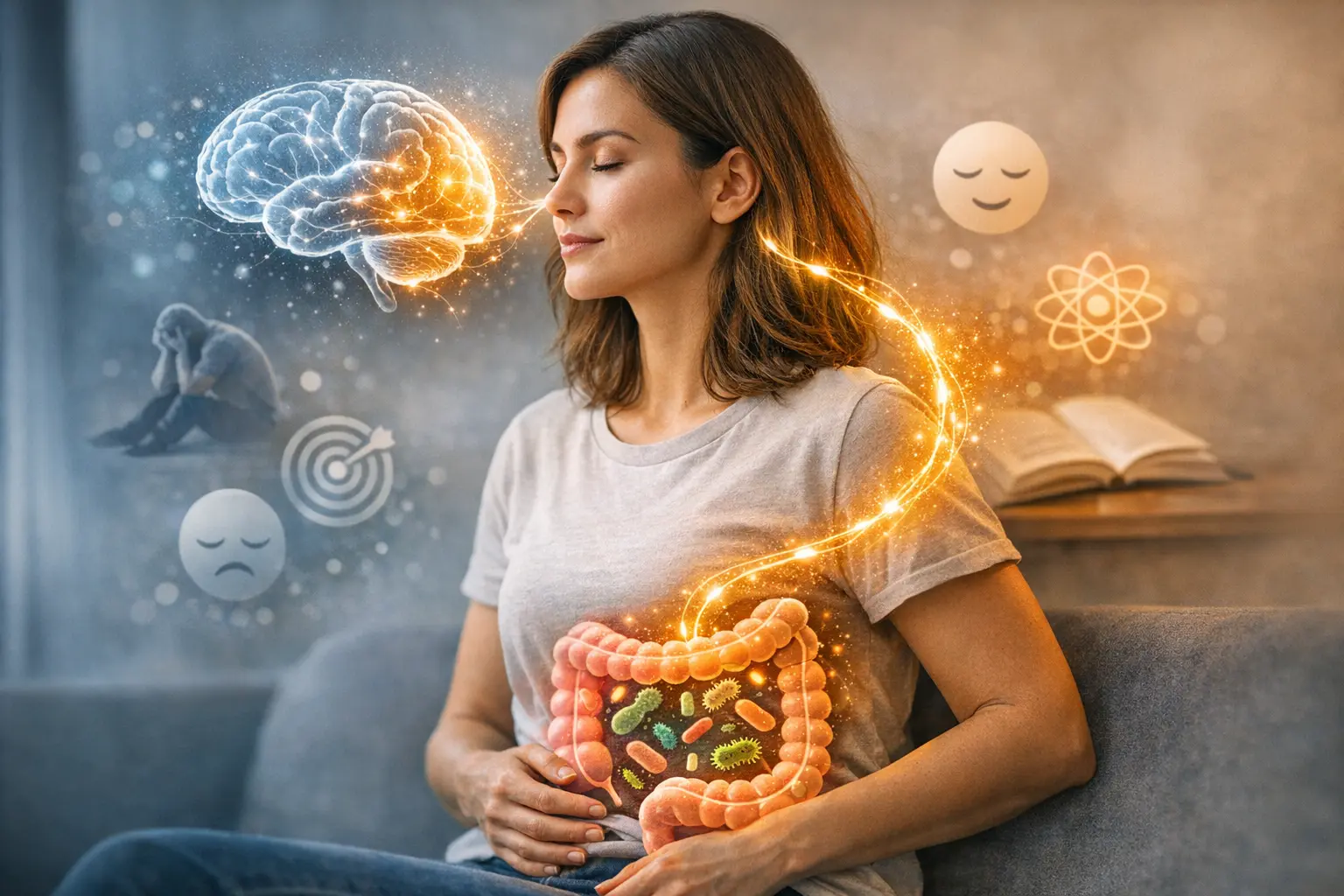
Your gut is not just digesting lunch—it’s constantly sending chemical, neural, and immune signals that shape how you feel, how you handle stress, and how clearly you think. This gut-brain “conversation” is so influential that improving your microbiome can meaningfully shift mood, anxiety, and focus—often faster than people expect and in ways that feel surprisingly tangible day to day.
Understanding the Gut-Brain Axis: The Connection Between Microbiome and Mental Health
The gut-brain axis is the two-way communication network connecting your digestive system and your central nervous system. It’s not a metaphor. It’s a real, biological feedback loop involving nerves, hormones, immune messengers, and microbial metabolites that can either stabilize your mental state or quietly erode it.
At a high level, four major “channels” drive this connection:
1) The vagus nerve (the fast lane).
The vagus nerve runs from the brainstem to the gut and back, transmitting signals in both directions. When your gut environment changes—through inflammation, infection, or shifts in microbial activity—your brain can “hear” it quickly via vagal signaling. This pathway helps explain why some people feel a near-immediate change in mood or calm after a meal, or why gut distress can make the world feel more threatening.
2) The immune system (the mediator).
A large portion of your immune system sits in and around the intestinal lining. When the gut barrier is irritated or overly permeable, immune cells release inflammatory cytokines—chemical signals that can influence neurotransmitter function, stress circuitry, and even sleep architecture. Chronic, low-grade inflammation is strongly associated with mood changes and cognitive “fog.”
3) The endocrine system (the hormone route).
Stress is not just “in your head.” The hypothalamic–pituitary–adrenal (HPA) axis regulates cortisol and other stress hormones, and the gut microbiome can tune how reactive that system becomes. A resilient microbiome often correlates with a more flexible stress response—less overreaction, faster recovery.
4) Microbial metabolites (the biochemical language).
Your microbes produce compounds that behave like signaling molecules. The most famous are short-chain fatty acids (SCFAs) such as butyrate, acetate, and propionate, created when bacteria ferment dietary fiber. These metabolites support the gut lining, modulate immune balance, and influence brain function via multiple routes, including blood circulation and nerve signaling.
More than 90% of serotonin in the body is produced in the gut (mostly used locally for gut motility), but that fact points to a broader truth: your digestive tract is a major neurochemical factory. It contains the enteric nervous system—often called the “second brain”—with hundreds of millions of neurons embedded in the gut wall. This system can operate independently, but it constantly exchanges data with the brain.
So what does this mean in real life? It means persistent digestive symptoms—bloating, constipation, diarrhea, reflux, unexplained stomach discomfort—are not just physical annoyances. They can be part of a larger pattern affecting sleep, emotional stability, motivation, and attention. And the reverse is also true: prolonged stress and anxiety can change gut motility, digestion, and microbial balance, creating a loop that keeps both systems stuck.
The Role of Gut Microbiota in Regulating Mood and Emotions
Mood isn’t only a psychological experience; it’s a physiological state. Your microbiome influences that state by shaping neurotransmitter availability, inflammation, and the brain’s sensitivity to stress signals.
Microbes influence neurotransmitter pathways—indirectly and directly.
Certain gut bacteria can produce neurotransmitter-like compounds (such as GABA) or influence precursors (like tryptophan) that your body uses to make serotonin and melatonin. It’s not as simple as “eat yogurt, make serotonin,” but the direction is clear: the microbiome helps set the baseline chemistry that supports emotional steadiness.
SCFAs support emotional resilience.
Butyrate deserves special mention. It’s a key fuel for colon cells, helps maintain the gut barrier, and influences immune regulation. When the gut barrier is healthier and inflammation is lower, the brain typically experiences fewer “danger signals” from the body. Many people feel this as fewer dips in mood, less irritability, and more stable energy.
Inflammation is a mood amplifier.
When gut inflammation increases, the immune system releases cytokines that can change neurotransmitter signaling and reduce neuroplasticity (the brain’s ability to adapt and rewire). That can tilt someone toward low motivation, decreased pleasure, or emotional volatility. If you’ve ever noticed that your mood worsens when your gut is “off,” inflammation is a prime suspect.
The gut barrier matters more than most people realize.
Your intestinal lining is designed to selectively absorb nutrients while keeping toxins and pathogens out of the bloodstream. When that barrier is compromised—sometimes described as increased intestinal permeability—more inflammatory triggers can leak into circulation. The result can be a body-wide inflammatory tone that doesn’t necessarily make you “sick,” but can make you feel flat, tense, or unusually reactive.
Real-world example: consider the pattern of someone who eats a low-fiber, highly processed diet for weeks. They may notice constipation, more cravings, and a subtle emotional edge—snapping more easily, feeling less patient, waking unrefreshed. Often these changes improve when fiber intake increases, hydration is consistent, and fermented foods are added slowly. That’s not magic; it’s a shift in microbial metabolism and immune signaling.
It’s also worth clearing up a common misconception: the “best” microbiome is not one specific profile. It’s more about diversity, stability, and functional output—especially robust fiber fermentation, controlled inflammation, and a healthy gut lining. Two people can have different microbial compositions and still be equally healthy if their systems are working well.
How Gut Health Influences Anxiety and Stress Responses
Anxiety is often treated as purely cognitive—thought patterns, worry spirals, catastrophizing. But anxiety is also a body state: heightened vigilance, increased muscle tension, faster heart rate, shallow breathing, and a nervous system biased toward threat detection. The gut can push that system toward calm or toward alarm.
The HPA axis and cortisol reactivity.
Under stress, your brain signals the HPA axis to release cortisol and other hormones that mobilize energy. In a healthy system, cortisol rises when needed and falls when the stress passes. But chronic stress can dysregulate this rhythm, and gut imbalance can intensify it. When the microbiome is weakened—low diversity, low fiber fermentation, higher inflammation—your stress response tends to become more reactive and less “recoverable.”
Gut sensations can reinforce anxious interpretation.
The brain constantly monitors internal sensations: stomach tightness, nausea, changes in bowel movements, reflux. If the gut is irritated, these sensations become louder. For an anxious brain, louder body signals can be interpreted as danger (“Something is wrong”), creating feedback that escalates worry. This is one reason gut-targeted strategies can reduce anxiety intensity even when the stressor is still present.
Blood sugar swings are an underrated anxiety trigger.
While not strictly “microbiome,” blood glucose stability is closely linked to gut health and dietary patterns that shape microbes. Rapid spikes and dips can mimic anxiety: shaky hands, racing heart, irritability, urgency. If your lunch is refined carbs with little protein or fiber, the afternoon crash can feel like nervousness or agitation. Building meals that slow digestion—protein, healthy fats, fiber—often smooths both mood and stress reactivity.
Histamine and food प्रतिक्रions can contribute to jitteriness for some.
Fermented foods help many people, but for a subset—especially those with histamine sensitivity—large amounts can increase flushing, headaches, or anxious restlessness. The lesson is to personalize: “gut-healthy” should feel stabilizing, not activating.
Practical stress-and-gut loop to watch for:
• High stress → reduced stomach acid and altered motility → poorer digestion
• Poor digestion → gas, bloating, discomfort → more internal threat signals
• More threat signals → increased vigilance and cortisol → altered microbiome and gut barrier
• Loop repeats
Breaking the loop doesn’t require perfection. It requires one or two consistent interventions that reduce physiological noise. Sometimes that intervention is as simple as eating on a schedule, adding 25–35 grams of fiber gradually, or walking after dinner to support motility and glucose control. Sometimes it’s addressing chronic constipation, reflux, or food intolerances that continuously irritate the system.
Ask yourself a diagnostic question: Do I feel more anxious on days my gut feels inflamed, constipated, or unsettled? If the answer is yes, your gut may be acting as an anxiety amplifier—even if it isn’t the original cause.
Nutritional Strategies to Enhance Gut-Brain Communication
Food is one of the most direct ways to change microbial activity because microbes eat what you don’t digest. The goal is not “more probiotics.” The goal is creating an internal environment where beneficial functions—fiber fermentation, barrier support, controlled inflammation—happen reliably.
1) Prioritize fiber, but increase it intelligently.
Fiber is the raw material for SCFA production. It also supports regularity and microbial diversity. But jumping from very low fiber to very high fiber overnight can cause bloating and discomfort.
Action plan:
• Aim for a baseline of 25–35g/day for many adults (needs vary).
• Increase by ~5g every few days, not all at once.
• Choose a mix: oats, beans/lentils, chia/flax, berries, leafy greens, carrots, sweet potatoes, apples, pears, nuts, and seeds.
2) Add prebiotic-rich foods to feed the right microbes.
Prebiotics are specific fibers that selectively nourish beneficial bacteria. Examples include onions, garlic, leeks, asparagus, slightly green bananas, oats, and cooled potatoes/rice (which contain resistant starch). Resistant starch is especially useful for butyrate production in many people.
Practical example: make a potato salad from cooked-and-cooled potatoes, olive oil, herbs, and a protein source. You’re not “hacking” your gut—you’re simply feeding microbes a substrate they convert into helpful metabolites.
3) Use fermented foods as a tool, not a religion.
Fermented foods can introduce beneficial microbes and bioactive compounds. Common options: yogurt with live cultures, kefir, sauerkraut, kimchi, miso, tempeh, and kombucha.
How to apply it:
• Start with small servings (a few tablespoons of sauerkraut or ½ cup yogurt).
• Track how you feel over 1–2 weeks: digestion, sleep, skin, mood steadiness.
• If you feel more bloated or jittery, reduce and try different types (or pause). Not everyone tolerates all ferments.
4) Build meals that stabilize glucose and stress hormones.
A gut-brain-supportive plate often looks “boringly balanced”: a protein, a fiber-rich carbohydrate, colorful plants, and healthy fat. This slows digestion, supports microbial metabolism, and prevents the cortisol-like feeling of a blood sugar slump.
Examples:
• Salmon + quinoa + roasted broccoli + olive oil
• Greek yogurt + berries + chia seeds + walnuts
• Lentil soup + side salad + extra-virgin olive oil
• Eggs + sautéed spinach + avocado + whole-grain toast
5) Don’t ignore omega-3s and polyphenols.
Omega-3 fats (fatty fish, algae oil) have anti-inflammatory effects that can support brain function and potentially improve gut barrier integrity. Polyphenols—plant compounds found in berries, cocoa, coffee, green tea, olive oil, herbs, and spices—act like “selective fertilizers” for certain beneficial microbes and can reduce oxidative stress.
6) Be cautious with ultra-processed foods and excess alcohol.
It’s not about moralizing food. It’s about predictable biology: many ultra-processed foods are low in fermentable fibers and high in additives, refined sugars, and industrial fats that can promote dysbiosis and inflammation in susceptible individuals. Alcohol can impair gut barrier function and disrupt sleep—two direct hits to mood and anxiety regulation.
7) Consider targeted supplements when food isn’t enough (with guidance).
Supplements can be useful, but they should be selected strategically.
Options worth discussing with a qualified clinician:
• Psyllium husk for regularity and gentle fiber support (start low).
• Magnesium glycinate for stress modulation and sleep quality (dose varies).
• Specific probiotic strains may help some people—particularly for IBS-like symptoms—but effects are strain-specific and not universal.
• Creatine (often for performance) can support brain energy in some individuals; not gut-targeted but relevant for cognition and mood resilience.
If you have persistent GI symptoms (pain, blood in stool, unexplained weight loss, chronic diarrhea), treat that as medical—not just “gut health.” Addressing underlying conditions can be transformative for mental health outcomes.
Harnessing the Power of the Gut-Brain Axis for Improved Focus and Productivity
Focus is not just willpower. It’s a state supported by stable energy availability, predictable neurotransmitter function, low background inflammation, and a nervous system that isn’t constantly scanning for threats. The gut influences all four.
1) Cognitive clarity often starts with reducing “internal noise.”
Brain fog is frequently a mix of poor sleep, unstable glucose, dehydration, and inflammatory signaling. When the gut is inflamed or motility is irregular, the brain gets more distress signals. You may still be able to concentrate, but it costs more effort—and your attention fractures more easily.
High-leverage habit: a consistent breakfast (or first meal) that includes protein + fiber can stabilize attention for hours. For many people, that outperforms chasing stimulation via caffeine alone.
2) The microbiome influences sleep, and sleep drives focus.
Sleep is where attention capacity is rebuilt. Gut microbes modulate inflammation and influence tryptophan metabolism (a precursor involved in serotonin and melatonin pathways). If your gut habits are impairing sleep—late heavy meals, alcohol, or trigger foods—your focus the next day will pay the price.
Actionable shift: finish your last significant meal 2–3 hours before bed, and prioritize easy-to-digest, fiber-containing foods at dinner (think cooked vegetables, lean protein, legumes if tolerated). Many people notice fewer awakenings and better morning clarity within weeks.
3) Strategic caffeine: support, don’t substitute.
Caffeine can enhance alertness, but it can also worsen anxiety and gut irritation in sensitive individuals—especially on an empty stomach. If coffee consistently makes you feel wired, urgent, or shaky, that’s not improved productivity; it’s stress physiology.
Better approach:
• Have caffeine after food, not before.
• Consider reducing dose and increasing quality of sleep and hydration.
• If anxiety is prominent, trial green tea (lower caffeine, contains L-theanine) or half-caf options.
4) Movement improves gut motility and brain function—fast.
A short walk after meals supports glucose control and stimulates gut motility. It also increases blood flow and can improve attention. This is one of the simplest gut-brain interventions with immediate payoff.
Practical productivity protocol:
• 10-minute walk after lunch
• 2 minutes of slow nasal breathing at your desk afterward
This combination lowers sympathetic “threat mode” and often restores the ability to do deep work.
5) Create a focus-friendly microbiome routine, not a complicated plan.
What works is consistency: daily fiber, regular meals, minimal gut irritants, and enough protein. You don’t need 30 supplements or a perfect diet to feel a shift.
A simple 7-day reset you can actually follow:
• Include 1 serving of legumes or oats daily (start small).
• Add 2 different colored plants at two meals per day (e.g., leafy greens + berries).
• Include 1 fermented food serving every other day (if tolerated).
• Drink water consistently; add electrolytes if you’re active or prone to headaches.
• Walk 10 minutes after one meal daily.
• Keep alcohol minimal and finish dinner earlier.
Track three metrics: stool regularity, afternoon energy, emotional reactivity. The pattern will tell you what your gut-brain axis is doing.
Want a sharper edge for focus beyond general gut health? Pay attention to constipation. It’s incredibly common and frequently overlooked. Sluggish motility can increase bloating, discomfort, and sleep disruption—each of which steals attention. Addressing constipation with fiber, hydration, magnesium (when appropriate), and routine movement can produce a noticeable cognitive lift.
Conclusion
The gut-brain axis is a living feedback system: your microbes help regulate inflammation, neurotransmitter-related pathways, stress hormone reactivity, and the quality of the signals traveling through nerves like the vagus. When that system is supported, many people experience steadier mood, lower background anxiety, and clearer focus—not because life gets easier, but because the body stops constantly pushing the brain toward alarm and fatigue.
The most effective approach is rarely extreme. It’s consistent basics: more diverse fibers, smart use of fermented foods, balanced meals that stabilize blood sugar, fewer gut irritants, better sleep timing, and daily movement that improves motility. If you’ve been trying to “think your way” into calm and focus, consider a different question: what if your physiology needs to feel safe first? Supporting your gut is one of the most practical ways to start that shift.