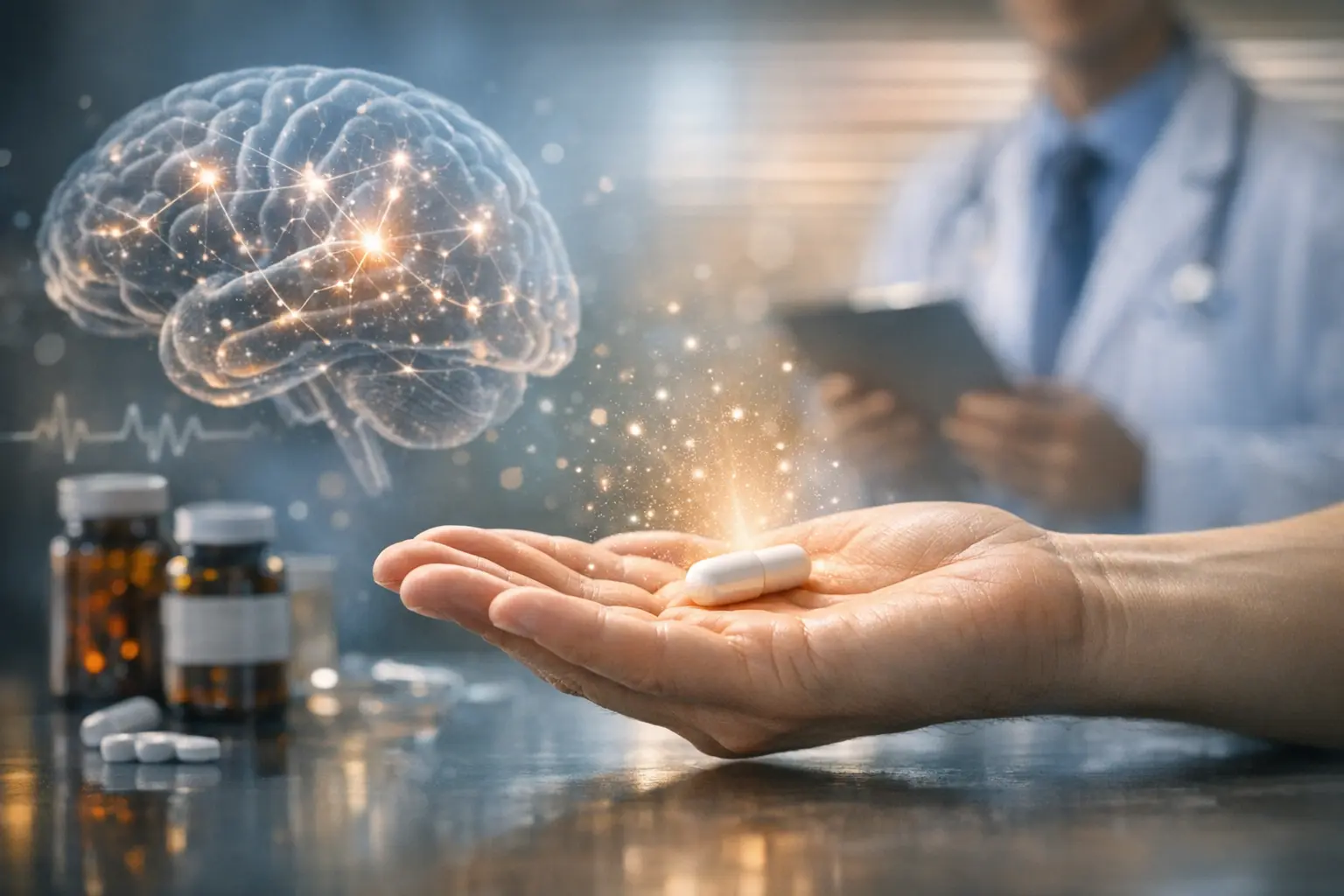
The placebo effect isn’t “imaginary,” and it isn’t a trick reserved for clinical trials—it’s a measurable, biology-driven phenomenon showing how expectations, context, and the brain’s predictive machinery can change symptoms, physiology, and even treatment outcomes. When you understand the science behind it, you start to see placebo not as a footnote to medicine, but as a powerful lens on how healing actually works.
The Neuroscience Behind the Placebo Effect: Understanding How the Mind Influences Healing
At its core, the placebo effect is the body responding to meaning. That’s not poetic language—it points to a real neurobiological process: the brain interprets cues (a pill, a clinician’s confidence, a familiar clinic smell, a ritual) and predicts what will happen next. Those predictions are not passive thoughts. They shape perception, regulate stress responses, and adjust neurochemical signaling.
To understand why placebo can be so powerful, you need to understand how the brain builds experience. Pain, fatigue, nausea, and breathlessness aren’t readouts from the body like a thermometer reading temperature. They’re perceptions—the brain’s best guess about what the body’s signals mean, based on incoming sensory data plus prior experience, expectations, and context. If that sounds unsettling, it shouldn’t. It’s exactly how perception is supposed to work: quickly, efficiently, and with survival in mind.
When someone expects relief, several systems can shift:
1) Endogenous pain control (opioid and cannabinoid pathways).
Placebo analgesia is one of the most well-characterized placebo responses. The brain can release its own pain-relieving chemicals—endogenous opioids and endocannabinoids—modulating pain pathways in the spinal cord and brain. In plain terms: expectation can turn down the volume on pain signals. This doesn’t mean pain is “all in your head.” It means the brain has built-in knobs and levers for pain regulation, and placebo can move them.
2) Dopamine and reward prediction.
In conditions involving motivation, movement, and reward processing, expectation can influence dopamine signaling. That matters because dopamine doesn’t just create pleasure; it helps the brain allocate attention, effort, and learning based on predicted outcomes. When a treatment context signals “help is coming,” the brain may shift into a state that supports improvement—less threat vigilance, more engagement, better adherence.
3) Stress biology (HPA axis and autonomic nervous system).
The hypothalamic–pituitary–adrenal (HPA) axis and the autonomic nervous system govern stress hormones, inflammation-related signaling, heart rate, gut motility, and more. A credible therapeutic ritual can reduce threat perception. Reduced threat can mean lower sympathetic arousal (“fight or flight”), which can ease symptoms like IBS flares, tension headaches, palpitations, and insomnia. The pathway often looks like this: context changes interpretation → interpretation changes stress response → stress response changes symptoms.
4) Immune and inflammatory modulation (indirect but real).
Placebo isn’t an “immune booster” in the simplistic sense, but immune activity is influenced by neuroendocrine states. Stress and expectation can shift inflammatory tone and symptom expression. For many conditions, especially those with fluctuating symptom burdens, the brain-immune conversation matters. This is one reason placebo effects often show up strongly in pain disorders, depression, anxiety, fatigue syndromes, and functional GI disorders.
There’s also a crucial distinction worth making: placebo effects can be strongest on symptoms (pain, nausea, fatigue, anxiety) and less reliable on hard disease endpoints (tumor size, viral clearance). However, symptoms are not trivial. They determine quality of life, functioning, and often whether people can stick with an effective treatment.
And this is the key: placebo effects are not “fake improvements.” They are real changes in brain and body processes driven by meaning, expectation, and learning.
Unpacking the Placebo Effect: Case Studies and Historical Context That Showcase Its Power
The modern view of placebo often starts with the randomized controlled trial: one group gets the active treatment, one gets an inert pill, and differences are measured. But the story is older—and more revealing—than that.
Why early medicine leaned on ritual.
For much of history, many treatments were biologically weak or outright useless. Yet patients sometimes improved. Was that always placebo? Not exactly—people also recovered naturally, or the condition fluctuated. But the therapeutic encounter itself often mattered: the authority of the healer, the certainty in the diagnosis, the symbolism of the remedy, the community’s belief. These ingredients can shape expectations and stress responses, which shape symptoms.
Surgery and “dramatic” placebos.
One of the most striking chapters in placebo history involves procedures. When a treatment is invasive, expensive, or elaborate, it carries more “meaning” than a simple pill—so expectation can be higher. In past decades, some procedures were found to have outcomes similar to sham versions for certain symptom-driven conditions, forcing medicine to confront a difficult possibility: some benefits were produced by context, not the mechanical action of the procedure.
This doesn’t mean surgery is placebo. Many procedures are lifesaving and mechanically necessary. The point is narrower: when outcomes are subjective (like pain and function), ritual and expectation can account for a surprising portion of improvement.
Case patterns that repeatedly reveal placebo’s strength.
You see strong placebo responses in areas where symptoms are:
- Highly influenced by the nervous system (pain, nausea, itch, fatigue)
- Variable over time (migraines, IBS, anxiety)
- Sensitive to attention and interpretation (shortness of breath, dizziness)
A classic “case study” pattern looks like this: a patient tries something framed as helpful, in a context that feels safe and authoritative, with clear instructions and a believable rationale. Within days, symptoms drop. Sometimes the drop is substantial. Then, when the patient later learns it was inert—or when trust collapses—symptoms return. What changed? Not the disease’s “reality,” but the brain’s prediction and threat model.
The flip side: nocebo effects.
History also shows a darker mirror of placebo: negative expectations can worsen symptoms. If a patient expects side effects, rates of those side effects often rise—even with inert pills. That’s not weakness; it’s predictive processing doing its job. If the brain is told to look for nausea or headache, it scans bodily sensations and interprets ambiguity as danger. The sensation becomes louder.
This is why language matters in medicine. The same truthful information can be delivered in ways that either amplify threat or support resilience.
The Role of Expectation and Belief: How Our Thoughts Shape Physical Outcomes
Expectation is not wishful thinking. In neuroscience terms, it’s a prior belief the brain uses to interpret sensory input and to prepare the body for what’s coming next. That preparation can be physiological: changes in muscle tension, hormonal release, gut motility, and immune signaling. So when people say “I knew it would help,” they may be describing a real process: the brain adjusted the body to match the expected outcome.
But expectation doesn’t appear out of nowhere. It’s built from multiple sources:
1) Conditioning (learning from past associations).
If you’ve repeatedly taken a certain-looking pill and felt better, your brain learns an association. Over time, the appearance of the pill—or even the act of taking it—can trigger a partial learned response. This is similar to how your body can start salivating when you smell food you’ve enjoyed before. In a clinical context, repeated pairings of a treatment ritual with relief can condition the body toward relief.
2) Credible rationale (a story your brain can use).
People don’t just need reassurance. They need an explanation that makes sense. A believable mechanism—presented clearly—helps the brain form a stable prediction: “This is why I’ll improve.” That prediction reduces uncertainty, and the brain hates uncertainty. Less uncertainty often means less threat.
3) Social proof and authority.
We are deeply social learners. If a trusted clinician expresses calm confidence, if friends report benefit, if a treatment is endorsed by a respected institution, expectations rise. This is not gullibility; it’s an efficient learning strategy. The danger, of course, is that it can also fuel misinformation when authority is misplaced.
4) Sensory cues and ritual.
The brain cares about ceremony. The color of a pill, the professionalism of the clinic, the time spent listening, the precise instructions—these are signals. They shape meaning. This is one reason why two treatments with identical pharmacology can yield different outcomes depending on how they’re delivered.
What placebo can and can’t do.
Here’s where many discussions go off the rails. Placebo is powerful, but it is not omnipotent.
- Placebo is strong for symptoms and subjective experience. Pain, nausea, fatigue, anxiety, and perceived function are especially responsive.
- Placebo is less consistent for structural disease changes. It won’t reliably shrink a tumor or clear a bacterial infection. However, by reducing stress and improving adherence, it can indirectly support recovery alongside real treatments.
- Placebo varies between individuals and situations. Some people show large responses, others minimal. Context matters.
A practical self-check: have you ever felt a headache ease after taking a pill—only to realize later it wasn’t your usual medication? Or felt jittery after reading a long list of side effects? Those are everyday examples of expectation shaping physiology. The same principle scales up in clinical environments.
Why belief alone isn’t always enough.
Belief can set the direction, but the brain still integrates real sensory data. If someone has severe tissue damage or an active infection, expectation may reduce perceived pain or distress, but it cannot rewrite biology indefinitely. This is also why placebo effects often appear as symptom relief rather than cure: the brain can modulate the experience and some regulatory physiology, but it can’t simply “think away” every pathology.
Still, symptom relief is not minor. It can mean sleeping through the night, returning to work, tolerating rehab exercises, or staying consistent with a medication plan. In real life, those changes cascade.
Harnessing the Placebo Effect in Clinical Practice: Strategies for Healthcare Professionals
If placebo is meaning-driven biology, then the question isn’t whether clinicians “use placebo.” The question is whether they shape meaning skillfully and ethically, or accidentally and inconsistently.
Here are practical, evidence-aligned strategies that strengthen therapeutic outcomes without deception.
1) Optimize the therapeutic relationship (it’s not “soft,” it’s clinical).
Time, warmth, and attentive listening are not luxuries. They reduce threat and improve disclosure, which improves diagnosis and adherence. Small behaviors matter: sitting down, maintaining eye contact, reflecting back what’s been said, and summarizing a plan. Patients who feel heard are more likely to trust the plan—and trust is a biological amplifier of expectation.
Actionable approach: end visits with a clear, confident summary: what you think is happening, what the plan is, what improvement should look like, and what to do if it doesn’t happen. Clarity reduces uncertainty.
2) Use “honest framing” to build expectation without overpromising.
Expectation is most helpful when it is realistic. Overpromising can backfire, especially if symptoms return. Instead, frame treatments with balanced confidence:
- Explain what most people experience.
- Set a timeline.
- Define what “success” looks like (often symptom and function improvement, not perfection).
- Normalize variability: “Some days will be better than others at first.”
This kind of framing supports hope without creating a brittle expectation that collapses at the first setback.
3) Reduce nocebo through careful side-effect communication.
Informed consent is non-negotiable. But the way side effects are presented can either trigger threat vigilance or support calm monitoring.
Practical technique: present side effects in a structured, non-alarming way—emphasize which are common and mild versus rare and serious, and give an action plan. Replace vague warnings (“This medication can cause lots of problems”) with specific guidance (“Most people tolerate this well. A small number notice mild nausea in the first week; taking it with food often helps. If you develop X or Y, stop and call us immediately.”).
4) Leverage ritual and consistency.
Consistency builds credibility. A coherent care pathway—regular follow-ups, a written plan, simple tracking—creates a treatment “container.” That container amplifies expectation and adherence.
Actionable approach: ask patients to track one or two meaningful metrics (pain interference, steps per day, sleep hours) rather than a dozen symptoms. Improvement becomes visible, and visibility reinforces expectation.
5) Pair active treatments with supportive context.
The goal is not to replace effective medicine with placebo. The goal is to combine biology with meaning. A potent drug delivered in a rushed, frightening environment may underperform. The same drug delivered with reassurance, understanding, and a credible plan can perform better in real-world outcomes like adherence and persistence.
6) Consider open-label placebos in selected scenarios.
A fascinating development is the “open-label placebo,” where patients knowingly take an inert pill with a clear explanation: placebo effects are real, the body can respond to the ritual, and taking the pill consistently can help. This approach avoids deception. It may be appropriate for certain symptom-driven conditions when integrated into a broader plan and when patients are receptive.
It’s not magic, and it’s not universal, but it reflects a mature clinical stance: the context of care is itself an intervention.
7) Teach patients how placebo mechanisms work—without implying blame.
Many patients hear “placebo” and think “you’re saying it’s not real.” Clinicians can preempt that misunderstanding by explaining that the brain regulates symptoms as part of normal physiology. The message is: your symptoms are real, and your nervous system is modifiable.
This can be especially helpful in chronic pain or functional disorders, where threat and hypervigilance can trap people in cycles of symptom amplification.
Ethical Considerations and Future Perspectives: Navigating the Placebo Effect in Modern Medicine
The placebo effect sits at an ethical crossroads. On one hand, it can relieve suffering. On the other, it has historically been used as an excuse for deception or as a substitute for proper diagnosis and effective care. Modern medicine has to hold both realities.
Deception undermines trust.
The classic unethical version of placebo is the clinician who knowingly gives an inert treatment while implying it’s an active medication. Even if symptoms improve, the deception risks long-term harm: if the patient discovers the truth, trust can be shattered—not only with that clinician, but with the healthcare system. Trust is hard to rebuild, and it is foundational to outcomes.
But context-based healing is not unethical.
There is a difference between deception and therapeutic communication. A clinician can ethically strengthen placebo mechanisms by being present, clear, and appropriately optimistic. No lying required.
Informed consent and patient autonomy.
Ethically harnessing placebo means respecting autonomy: patients deserve to know what they’re taking, what is known, what isn’t, and what alternatives exist. This is where open-label placebo models and transparent expectation-setting become promising. The patient is a collaborator, not a target of manipulation.
Equity concerns: who gets “good context”?
Placebo mechanisms are amplified by time, attention, follow-up, and a supportive environment—resources that are unevenly distributed. If only well-resourced clinics can provide the relational and contextual ingredients that improve outcomes, disparities widen. One of the most practical ethical imperatives is to make high-quality communication and structured support standard, not boutique.
The future: precision placebo and better trial design.
As health science advances, the placebo effect is becoming something we can model rather than dismiss. Expectation, conditioning, genetics, baseline anxiety, prior experiences with medicine, and clinician-patient rapport all influence responsiveness. Future care may include identifying who is likely to benefit from context amplification and tailoring communication accordingly.
Clinical trials are also evolving. Better placebo controls, active placebos (that mimic side effects), and designs that separate natural symptom fluctuation from true placebo response help clarify what treatments truly do—while also showing how much the context matters.
A sober warning about misuse.
Recognizing placebo’s power should never become an excuse for pseudoscience. A compelling story plus a ritual can produce real symptom shifts—temporarily—without treating underlying disease. That’s why ethical practice requires two commitments at once: respect the biology of meaning, and insist on biologically plausible, evidence-aligned care for conditions where disease modification matters.
In other words: use placebo mechanisms to enhance real medicine, not to replace it.
Conclusion
The placebo effect is more powerful than you think because it’s not a trick—it’s the nervous system doing what it was built to do: predict, protect, and regulate the body based on context and meaning. Expectations can trigger real neurochemical changes, reduce threat physiology, and reshape symptom perception in ways that materially improve quality of life.
Seen clearly, placebo is not an argument against medicine; it’s an argument for better medicine—medicine that treats the molecule and the meaning, the protocol and the person. When clinicians communicate with clarity, build trust, reduce unnecessary threat, and create coherent treatment rituals, they aren’t “just being nice.” They are activating biology that can make every legitimate therapy work better.
The most practical takeaway is also the most humane: how care is delivered is part of the care. If you want better outcomes, don’t only ask, “What treatment do we use?” Ask, “What does this treatment mean to the patient—and what is their brain being trained to expect?”

