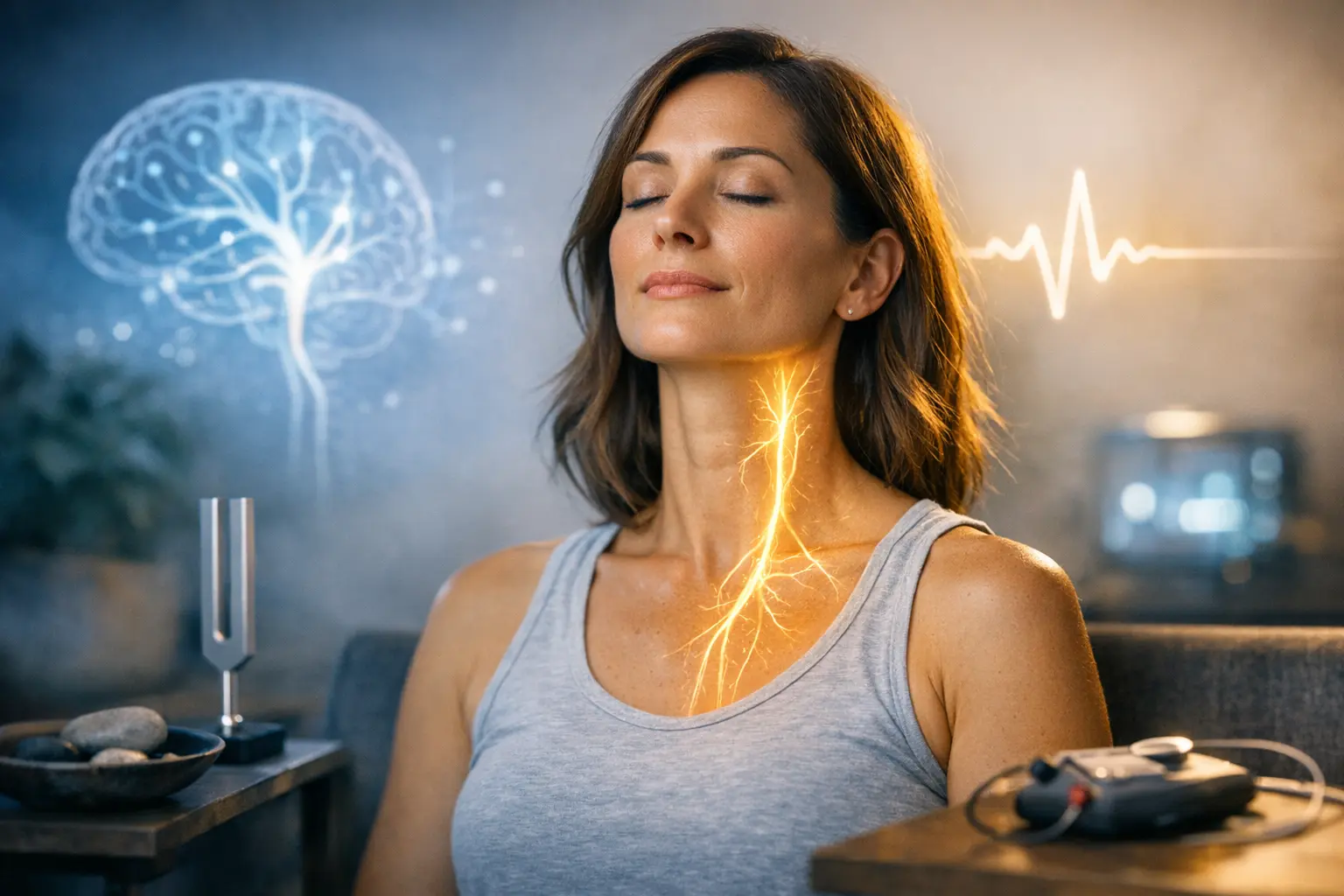
The vagus nerve is one of the most powerful “control lines” between your brain and body—quietly shaping stress responses, digestion, inflammation, heart rhythm, mood, and even how quickly you recover after a hard day. Vagus nerve stimulation (VNS) and nervous-system regulation techniques aim to strengthen that communication so you can shift out of fight-or-flight and back into balance more reliably. What’s hype, what’s clinically proven, and what can you safely practice today to support a steadier nervous system?
Understanding the Vagus Nerve: A Key Player in the Autonomic Nervous System
The autonomic nervous system (ANS) runs the functions you don’t consciously manage: heartbeat, breathing patterns, blood pressure, gut motility, temperature regulation, and more. It has two major functional “branches”:
Sympathetic activation supports action—mobilizing energy for challenge, vigilance, and survival. You’ve felt it as racing thoughts, shallow breathing, or a pounding heart.
Parasympathetic activation supports restoration—digestion, repair, social engagement, and sleep readiness. This is where your body does its best work long-term.
The vagus nerve is the primary parasympathetic nerve. It originates in the brainstem and travels down the neck into the chest and abdomen, sending branches into the heart, lungs, and digestive tract. Because it interfaces with so many organs, it’s less like a single wire and more like a major communications highway.
One crucial point that many people miss: the vagus nerve is mostly sensory (afferent). A large portion of vagal traffic travels from the body to the brain. That means the brain’s perception of safety or threat is heavily informed by signals from your heart rhythm, breath, gut activity, immune signaling, and even throat/laryngeal function.
This helps explain why “thinking your way out of stress” often fails. If your body is sending threat-like signals upward—tight chest, erratic breathing, gut discomfort—your brain receives that as evidence that something is wrong. Regulation works best when you influence those bottom-up signals.
What is vagal tone? In everyday language, vagal tone refers to how effectively the vagus nerve supports flexible shifts between arousal and calm. High, functional vagal tone is associated with the ability to respond to stress when needed and then return to baseline without staying stuck. Clinically, it’s often approximated using measures related to heart rate variability (HRV), though HRV is influenced by multiple factors (sleep, hydration, training load, illness, alcohol, and more) and shouldn’t be treated as a moral scorecard.
Why does this matter for modern life? Most stressors today aren’t short and physical—they’re chronic and cognitive: constant notifications, financial uncertainty, relational strain, long work hours, under-sleeping, and sedentary habits. Your survival physiology can remain subtly “on” for too long, creating a mismatch: high sympathetic output without the resolution that would naturally follow a brief, intense threat. Vagus-focused regulation skills are essentially tools for closing that loop.
The Science Behind Vagus Nerve Stimulation: Mechanisms and Benefits
Vagus nerve stimulation refers to methods that increase vagal signaling or influence vagus-mediated pathways. In medicine, VNS has a very specific meaning—an implanted device delivering electrical pulses. In mainstream wellness, “vagus nerve stimulation” often describes non-invasive techniques (breathing, cold exposure, humming) and consumer devices that stimulate vagal-accessible regions (like the outer ear).
To understand benefits without getting lost in jargon, it helps to map the main mechanisms.
1) Shifting autonomic balance through cardio-respiratory coupling
Breathing is one of the fastest ways to influence the ANS because respiration and heart rhythm are tightly linked. Slow exhalations increase parasympathetic influence on the heart via vagal pathways. This is one reason calm breathing can reduce palpitations, lower perceived anxiety, and improve emotional steadiness in the moment.
2) Modulating threat and safety circuits in the brain
Vagal afferents project to brainstem nuclei involved in arousal regulation, then connect into networks related to emotion, attention, and interoception (your ability to sense internal bodily states). When vagal signaling supports steadier breathing and heart rhythm, the brain receives more “safety” data. That can reduce hypervigilance and improve cognitive control under stress.
3) Influencing inflammation through neuroimmune pathways
The nervous system and immune system are in continuous dialogue. Vagal pathways can influence inflammatory signaling, which matters because chronic inflammation can contribute to fatigue, low mood, pain sensitization, and metabolic dysfunction. VNS has been explored as a way to modulate inflammatory activity in certain conditions, though it’s not a blanket anti-inflammatory cure.
4) Supporting digestion and gut-brain communication
Vagal branches influence swallowing, stomach function, and gut motility. When you’re stressed, digestion often slows (sympathetic dominance). When you shift toward parasympathetic activity, many people notice improved appetite regulation, reduced “stress stomach,” and better bowel regularity—though diet, microbiome health, and medical conditions still matter.
What benefits are realistic to expect?
For many people, effective vagal regulation practices lead to:
- Faster recovery from stress (less time stuck in activation)
- Improved sleep onset and fewer nighttime awakenings (especially when paired with good sleep hygiene)
- Lower baseline tension in jaw, neck, and chest
- Better emotional “range”—not numb, not overwhelmed, more flexible
- Improved resilience during demanding work or training cycles
What it won’t do: Vagus-focused interventions don’t replace therapy for trauma, medication for severe depression, or medical evaluation for heart rhythm issues, seizures, or GI disease. They can be excellent complements, but they aren’t a substitute for diagnosis and treatment when needed.
A quick reality check on “stimulating the vagus nerve” claims
A technique doesn’t need to directly touch the vagus nerve to influence vagal output. Many practices work indirectly—by altering breathing, posture, muscle tension, and your brain’s interpretation of safety. The best signal that something is working is not a trendy label; it’s measurable change: calmer breath, steadier heart rate, improved HRV trends over time, better sleep, fewer stress-driven behaviors, and improved daily functioning.
Nervous System Regulation: Techniques and Practices for Optimal Health
Nervous system regulation isn’t about being calm all the time. It’s about being able to move up and down the intensity ladder on purpose—focused when you need to perform, and relaxed when it’s time to recover.
Below are methods that reliably influence vagal pathways and autonomic balance. The goal is consistency, not perfection. Try one or two for two weeks before you add more.
1) Breath protocols that emphasize the exhale
Most people breathe too fast and too shallow under stress. A longer exhale tends to increase parasympathetic influence.
- Start simple: inhale for 4 seconds, exhale for 6–8 seconds. Repeat for 3–5 minutes.
- Use it situationally: before a meeting, after an argument, or when you feel “wired but tired.”
- Make it physical: relax the shoulders and jaw; place one hand on the lower ribs to encourage slower, fuller breathing.
If you’re prone to panic, air hunger, or dizziness, keep the pace comfortable. Regulation should feel settling, not like a challenge.
2) Resonance breathing for HRV support
Many people respond well to ~5–6 breaths per minute (roughly 10–12 seconds per full breath cycle). This can amplify natural oscillations in heart rhythm and support autonomic flexibility. If you track HRV, this is one of the few techniques that can produce noticeable short-term changes—though day-to-day HRV still depends heavily on sleep, illness, alcohol, and training load.
3) Humming, chanting, and extended vocal exhalations
The vagus nerve interfaces with the throat and larynx through related cranial nerves and brainstem circuits. Long, voiced exhalations (humming, chanting, “voo” breath, singing) can slow breathing and shift internal state.
- Try 60–90 seconds of humming on an easy pitch.
- Pay attention to vibration in the chest and face; keep the throat relaxed.
- Use it as a “bridge” practice when you can’t sit still to meditate.
4) Cold exposure—small and strategic
Cold can be stimulating, but controlled exposure—especially to the face—can engage reflexes that slow heart rate. The key is dosage.
- Practical option: splash cool water on your face or use a cool compress over cheeks/eyes for 15–30 seconds.
- After stress: this can help “downshift” if your body feels stuck in activation.
Avoid aggressive cold plunges if they spike anxiety, trigger breath-holding, or leave you feeling keyed up for hours. People with certain cardiovascular conditions should consult a clinician before cold exposure protocols.
5) Posture, neck tension, and the “airway stack”
Vagal signaling is influenced by breathing mechanics, and breathing mechanics depend on posture. Forward head posture and chronically elevated ribs can keep breathing shallow and upper-chest dominant.
- Do a 30-second reset: feet grounded, pelvis neutral, ribs gently down, chin slightly tucked (not forced), slow nasal breathing.
- Add gentle neck mobility and jaw relaxation—tension here often correlates with sympathetic arousal.
This is not about perfect posture. It’s about giving your nervous system a better mechanical platform.
6) Social regulation: eye contact, tone, and safe connection
Humans are wired to co-regulate. Warm facial expression, a slower vocal cadence, and safe social contact can reduce threat signals. Ever notice how stress drops when someone calm is in the room? That’s not weakness—it’s biology.
- Send a voice note instead of a text when emotions run high.
- Take a short walk with someone you feel safe with.
- If you’re a parent or leader, your tone often regulates the room more than your words.
7) Exercise as a regulator (not just a stressor)
Hard training can improve resilience, but only if recovery is adequate. For regulation, prioritize:
- Zone 2 aerobic work (conversational pace) to build a calmer baseline
- Strength training with controlled breathing and longer rests (avoid turning every session into a sympathoadrenal event)
- Downshifting rituals post-workout: 2 minutes of slow breathing, light stretching, a brief cool-down walk
8) Sleep and circadian anchors
If your sleep is unstable, nervous-system regulation practices can help—but they won’t replace circadian basics:
- Bright light in the first hour after waking
- Consistent wake time most days
- Cool, dark sleeping environment
- Caffeine cut-off that matches your sensitivity (often 8+ hours before bed)
Want a simple evening regulation plan? Try: 10-minute walk after dinner, 5 minutes of long exhales, dim lights, and no problem-solving in bed.
Exploring Clinical Applications: Vagus Nerve Stimulation in Therapeutic Settings
Clinical vagus nerve stimulation is not a wellness trend—it’s a medical intervention with specific indications, screening protocols, and risk-benefit considerations.
Implanted VNS
The best-established form involves a surgically implanted pulse generator (similar in concept to a pacemaker) with leads that stimulate the vagus nerve in the neck. This has been used in treatment-resistant epilepsy and depression, where modulation of brain networks can reduce symptom burden for some patients over time.
What it can look like in practice:
- A patient with refractory seizures who continues to have episodes despite medication may be evaluated for VNS as an adjunct therapy.
- A patient with long-standing, treatment-resistant depression may be considered for VNS when multiple medication and psychotherapy approaches haven’t been sufficient.
Non-invasive VNS (nVNS)
Non-invasive approaches stimulate vagal-accessible areas without surgery. Two common clinical directions include:
- Transcutaneous auricular stimulation (ear-based): targets regions of the outer ear with vagal-related innervation.
- Cervical nVNS (neck-based): uses external devices applied to the neck.
These methods are being explored across conditions where autonomic imbalance or pain-processing pathways are relevant (for example, certain headache disorders). The clinical landscape changes as new devices and regulatory approvals evolve, so evaluation should be done with a qualified clinician rather than based on marketing claims.
Regulation vs. treatment: a critical distinction
A person can use breathwork and downshifting techniques to improve day-to-day regulation and still need medical treatment for an underlying disorder. Likewise, a patient receiving clinical VNS still benefits from foundational regulation skills—because habits and environment continue to shape nervous system input every day.
Safety and contraindications to keep in mind
Most gentle regulation practices are low-risk, but device-based stimulation and aggressive protocols require caution. People should seek medical guidance if they have:
- Known heart rhythm disorders or unexplained syncope (fainting)
- Implanted electrical devices (pacemakers, defibrillators) unless cleared by a specialist
- Seizure disorders (for certain practices and devices)
- Severe panic symptoms triggered by breath restriction or air hunger
- Complex trauma where body-focused practices rapidly increase distress (a trauma-informed approach can still help, but pacing matters)
If a technique makes you feel worse—more anxious, dizzy, disconnected, or panicky—treat that as useful feedback. Regulation is individualized. The nervous system’s job is to protect you, and sometimes it resists strategies that feel unfamiliar or unsafe.
Future Directions: Emerging Research and Innovations in Vagus Nerve Stimulation
Vagus nerve stimulation sits at the intersection of neuroscience, cardiology, immunology, and behavioral health. That makes it one of the most promising—and most complex—frontiers in modern medicine and performance science.
1) Closed-loop stimulation (personalized dosing)
Traditional stimulation protocols often use preset parameters. The future is increasingly “closed-loop”: devices that adjust stimulation based on real-time physiological data such as heart rhythm patterns, respiration, or other biomarkers. In plain language, that means less guesswork and a better chance of matching stimulation to the moment your body actually needs it.
2) Targeted stimulation with fewer side effects
One challenge with any neuromodulation approach is specificity. Researchers and device designers are working toward more selective targeting—stimulating the desired fibers while minimizing off-target effects like voice changes, throat sensations, or discomfort. Improvements in electrode design, waveforms, and placement strategies are part of this evolution.
3) Combining VNS with behavioral therapy and rehabilitation
One of the most interesting directions is pairing neuromodulation with learning-based therapies. Why? Because the nervous system changes through plasticity—repetition, feedback, and timing. When stimulation is paired with rehabilitation exercises, speech therapy, or exposure-based approaches, it may enhance learning signals and consolidate new patterns more efficiently.
4) Integration with mental health care that respects physiology
Talk therapy remains essential, but the broader field is increasingly acknowledging that physiology shapes attention, emotion, and impulse control. Expect more integrated care models that combine:
- trauma-informed psychotherapy
- sleep and circadian interventions
- fitness and metabolic health support
- regulated breathing and interoceptive training
- select neuromodulation tools when appropriate
5) Better consumer education and standards
As consumer stimulation devices proliferate, a major need is clear guidance: who benefits, who should avoid certain approaches, and what outcomes are realistic. The most valuable innovation may not be a new gadget—it may be better protocols, screening, and coaching that prevent misuse and disappointment.
A practical way to think about the future: vagus nerve stimulation is moving from a one-size-fits-all concept to a precision approach. The same way exercise science matured from “just work out” to individualized training plans, nervous-system regulation is becoming more tailored—based on physiology, symptoms, and context.
Conclusion
Vagus nerve stimulation and nervous-system regulation aren’t mystical hacks—they’re practical ways of influencing the biology that governs stress, recovery, mood, digestion, and resilience. The vagus nerve matters because it carries a constant conversation between body and brain, and that conversation shapes whether you feel safe enough to rest and repair or driven to brace and react.
If you want a grounded starting point, focus on what reliably moves the needle: longer exhales, slow resonance breathing, downshifting after exercise, posture and jaw/neck tension resets, and consistent sleep anchors. Build skill through repetition, not intensity. Then, if you’re exploring device-based stimulation or you’re managing a clinical condition, treat VNS as a medical-grade tool—best used with professional guidance and clear goals.
The real win is flexibility: the ability to meet life with energy when it matters and return to baseline when it’s done. That’s what a well-regulated nervous system looks like in the real world.