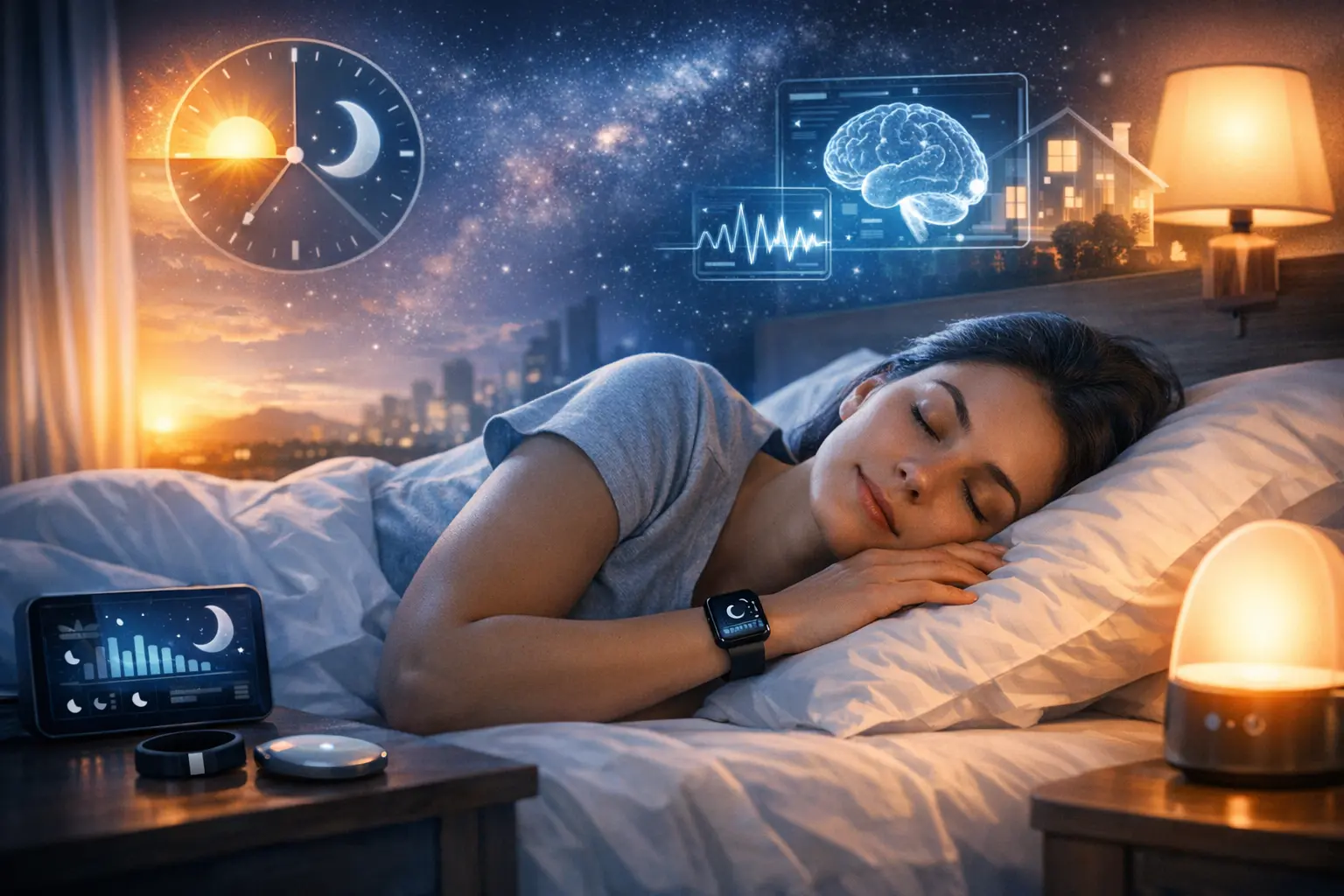
Sleep optimization is no longer just about getting “eight hours”—it’s about aligning your biology with the clock you live by, and leveraging modern circadian technology to make that alignment easier, measurable, and sustainable. When your internal rhythms and your environment work together, sleep becomes deeper, energy becomes steadier, and health outcomes quietly improve in ways most people don’t realize until they feel the difference.
The Science of Sleep: Understanding Circadian Rhythms and Their Impact on Health
To optimize sleep, you have to understand what you’re optimizing. Sleep isn’t a simple on/off state; it’s a tightly orchestrated biological program governed by two major systems: your circadian rhythm (your internal 24-hour clock) and your sleep drive (the pressure that builds the longer you’re awake).
Your circadian rhythm is coordinated by a “master clock” in the brain called the suprachiasmatic nucleus (SCN), which uses light signals from your eyes to keep time. In practical terms, this clock tells your body when to be alert, when to cool down, when to release hormones like melatonin, and when to prioritize repair and recovery.
Meanwhile, your sleep drive is influenced by adenosine, a molecule that accumulates during wakefulness and produces sleepiness. Caffeine works largely by blocking adenosine receptors—one reason it can feel so effective, and one reason it can sabotage sleep if used late in the day.
When circadian rhythm and sleep drive are aligned, falling asleep is easier, sleep is more consolidated, and waking feels more natural. When they’re misaligned—think late-night bright screens, inconsistent bedtimes, shift work, or frequent travel—your body can be “tired but wired.” You may be in bed for long enough, yet your sleep architecture (the pattern of light, deep, and REM sleep across the night) becomes fragmented.
This is where sleep becomes a health issue, not just a comfort issue. Circadian misalignment can affect:
- Metabolic health: appetite signals shift, glucose handling worsens, and cravings intensify—especially later in the day.
- Mood and resilience: emotional regulation and stress tolerance become weaker when sleep is short or mistimed.
- Immune function: your body’s recovery systems run heavily overnight; chronic disruption can dull that response.
- Cognitive performance: reaction time, working memory, and decision-making decline—even if you “feel okay.”
A key nuance: optimizing sleep isn’t only about maximizing deep sleep or REM sleep on a dashboard. It’s about creating predictable conditions that allow your brain and body to move through natural stages with minimal interruptions. The goal is rhythm, not perfection.
Ask yourself: do you struggle more with falling asleep, staying asleep, or waking too early? Each problem can point to a different mismatch—timing, light exposure, stress load, temperature, or behaviors that keep your system activated when it should be decelerating.
Exploring Advanced Technologies for Sleep Tracking and Optimization
Today’s sleep technology has evolved from basic step counting to sophisticated assessments of sleep patterns, circadian timing, and recovery. The best tools don’t replace physiology; they help you observe it—and then shape your choices accordingly.
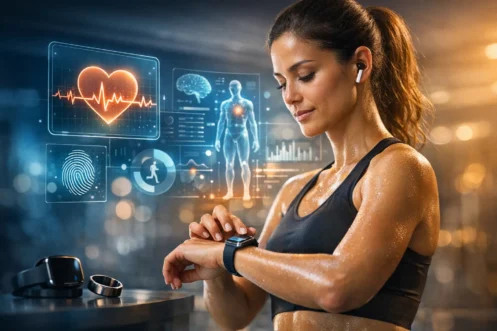
Consumer wearables (rings, watches, bands) typically estimate sleep stages using motion (actigraphy) and heart-based metrics such as heart rate (HR) and heart rate variability (HRV). HRV is often used as a proxy for autonomic nervous system balance—higher (in context) can suggest better recovery, while consistently low values may signal stress, illness, overtraining, alcohol effects, or sleep debt.
These devices aren’t perfect at staging sleep compared to clinical polysomnography, but they’re powerful for trends. The most valuable insights usually come from:
- Consistency: bedtime/wake time regularity over weeks
- Sleep duration: average total sleep time, not one “good night”
- Sleep continuity: awakenings and restlessness
- Recovery signals: resting heart rate, HRV trends
Bed-based sensors (under-mattress or bedside radar) remove the “wearable burden” and can track respiration rate, movement, and sleep timing. These can be ideal for people who dislike wearing devices or who want a passive, low-friction approach.
Smart alarms attempt to wake you during lighter sleep phases. For some people, this reduces morning grogginess. For others, it doesn’t matter much—especially if overall sleep time is too short. Smart alarms are an accessory, not a substitute for adequate sleep.
Temperature-based tech has gained serious traction because thermoregulation is deeply tied to sleep onset and stability. Your core body temperature naturally drops at night, and environments that support this drop can improve sleep initiation. Tools include:
- Active cooling/heating mattress pads
- Smart thermostats programmed for night-time conditions
- Wearables that infer temperature trends and suggest adjustments
Breathing and sound technologies (guided breathwork, adaptive soundscapes, snore detection, and sometimes snore intervention) can reduce sleep fragmentation for some users. The most useful feature is often simple: identifying patterns. Are you snoring more after alcohol? After late meals? When sleeping on your back? Pattern recognition leads to targeted change.
One caution: tracking can become counterproductive if it creates anxiety—sometimes called orthosomnia (an unhealthy obsession with “perfect” sleep). If you find yourself stressed by nightly scores, shift to weekly averages and a smaller set of metrics. Sleep improves when the nervous system feels safe, not judged.
Used well, the best sleep tech supports a feedback loop:
- Measure (timing, continuity, recovery)
- Adjust (light, caffeine timing, temperature, routine)
- Re-measure (confirm what actually helps)
Practical Strategies for Enhancing Sleep Quality Through Lifestyle Adjustments
Technology is helpful, but lifestyle is the foundation. If you want higher-quality sleep consistently, focus on a small set of high-leverage behaviors—the ones that align your circadian rhythm and reduce nighttime arousal.
1) Lock in a consistent wake time
If you change only one thing, change this. A stable wake time anchors your circadian system more effectively than a strict bedtime. When wake time is consistent, sleep drive builds predictably and melatonin timing stabilizes. Weekends count; if you “sleep in” by two or three hours, you’re essentially giving yourself a mild form of jet lag.
2) Use caffeine like a tool, not a habit
Caffeine can linger longer than most people think. If you’re sensitive or struggling with sleep onset, set a caffeine cutoff—often 8–10 hours before bed is a reasonable starting point. That means if you aim to sleep at 11 p.m., consider making 1–3 p.m. your last caffeinated drink. You don’t need to quit caffeine to optimize sleep; you need to time it.
3) Re-think alcohol as a “sleep aid”
Alcohol may make you sleepy, but it commonly disrupts the second half of the night, increases awakenings, and suppresses restorative sleep. If you enjoy drinking, tighten the window: earlier, smaller amounts, and with hydration. Many people see immediate improvements in sleep continuity from this alone.
4) Train, but time your intensity
Exercise generally improves sleep quality and mood. The main timing issue is very intense training too close to bedtime, which can keep your nervous system activated (elevated core temperature, adrenaline, higher heart rate). If late is your only option, choose lower-intensity work, extend your cooldown, and prioritize post-workout downshifting (shower, dim lights, slow breathing).
5) Create a downshift ritual (15–30 minutes)
Your brain needs a runway to land. A simple sequence—same order, same environment—can condition sleepiness. Examples:
- Dim lights + phone on charger outside the bedroom
- Warm shower or bath (helps trigger a post-cooling effect)
- Light stretching or mobility
- Journaling: “tomorrow list” to offload mental tasks
- Breathwork: slow nasal breathing, longer exhales
6) Protect the bedroom’s job description
Your bedroom should cue sleep, not work or conflict. Keep it cool, dark, and quiet; avoid working from bed. If you can’t sleep after about 20–30 minutes, get up and do something calm in dim light until you feel sleepy again. This protects the association between bed and sleep rather than bed and frustration.
7) Time food to support sleep
Large late meals can increase awakenings and reflux. But going to bed hungry can also backfire. Aim for a balanced dinner a few hours before bed. If you need a small pre-sleep snack, think modest and easy to digest. Also consider that very late eating can shift circadian rhythms in peripheral tissues (like the liver), undermining overall alignment over time.
A practical example of lifestyle-driven optimization: if your sleep tracker shows frequent wake-ups around 3–4 a.m., experiment with (a) earlier alcohol cutoff, (b) a cooler bedroom, and (c) a slightly earlier dinner. Many people see measurable change within a week—because the intervention targets common physiological disruptors.
The Role of Light and Environment in Circadian Rhythm Management
If circadian rhythm had a steering wheel, light would be your hands on it. Light exposure—especially its timing, intensity, and spectrum—strongly influences melatonin production, alertness, and sleep timing.
Morning light: the most underrated sleep intervention
Getting bright light soon after waking helps set your clock for the day. It increases alertness, supports earlier melatonin release at night, and can make bedtime sleepiness arrive more naturally. Outdoor light is far more powerful than indoor lighting, even on cloudy days.
Actionable target: try 10–20 minutes of outdoor light within an hour of waking. If that’s not practical, sit near a bright window and consider a dedicated bright-light device in darker seasons or early schedules. The goal is consistency, not perfection.
Evening light: the silent sleep thief
At night, your brain expects darkness. Bright light—especially cool, blue-enriched light—can delay melatonin onset and push your sleep later. This often shows up as “I’m tired all day but wide awake at night.”
Practical approach:
- Dim overhead lights 2–3 hours before bed
- Use warmer lamps instead of bright ceiling fixtures
- Lower screen brightness and consider warm color settings in the evening
- Keep the bedroom as dark as possible (blackout curtains if needed)
Light at night doesn’t have to be dramatic to matter
A bright bathroom light during a midnight wake-up can signal “daytime” to your brain. Use a dim, warm nightlight for navigation. This small change often reduces full awakenings and helps you return to sleep faster.
Temperature and airflow
Most people sleep best in a cooler environment because sleep initiation is linked to a drop in core temperature. A common range is roughly 60–67°F (15–19°C), but individual preferences vary. What matters is that you’re not overheating.
Consider:
- Cooling bedding and breathable fabrics
- Lower thermostat at night, with a warmer pre-wake period if needed
- Airflow or white noise to mask disruptions
Noise and predictability
Even if noise doesn’t fully wake you, it can fragment sleep. White noise, fans, or sound masking can increase continuity—especially in urban environments. The goal is not silence; it’s stable sound.
Why “environment” includes your schedule
Your environment isn’t just the bedroom—it’s your calendar. Irregular work hours, late-night email, and inconsistent meal timing create physiological uncertainty. If your evenings are chaotic, your sleep will reflect that. Building a consistent “lights down” time—when your home shifts into night mode—often improves sleep more than any gadget.
Innovative Solutions: Future Trends in Sleep Optimization and Circadian Tech
Sleep optimization is moving from simple tracking into active circadian management—systems that don’t just measure what happened, but shape the conditions that determine what happens next. The next wave of circadian technology is about personalization, automation, and closed-loop interventions.
1) Personalized circadian profiling
Not everyone has the same chronotype (natural preference for earlier or later sleep). Future tools will better estimate your internal timing—using multi-sensor data such as skin temperature rhythms, resting heart rate cycles, activity patterns, and light exposure history. Instead of generic advice like “go to bed earlier,” you’ll see recommendations like: “Your melatonin window is shifting later; increase morning light and reduce late-night brightness for three days.”
2) Smarter light ecosystems (circadian lighting)
We’re moving toward lighting that automatically changes color temperature and intensity across the day—bright and blue-enriched in the morning, warmer and dimmer at night. The key improvement will be better integration with real life: travel schedules, shift work, daylight seasonal changes, and in-home behaviors.
Imagine your home detecting that you woke at 6:30 a.m., then progressively adjusting light indoors to reinforce alertness, before gradually transitioning into a low-light evening environment without you thinking about it. For many households, this will become as normal as smart thermostats are today.
3) Closed-loop temperature regulation
Temperature control is particularly promising because it’s mechanical and immediate. We’ll likely see more systems that adjust bed temperature dynamically across the night—cooling during sleep onset, maintaining stability in deep sleep windows, then gently warming in the pre-wake phase to support easier waking.
This matters because waking naturally is not just psychological; it’s biological. A subtle temperature shift can act like a “body-level alarm clock” that supports circadian timing.
4) Audio and neurorelaxation interventions
Sound-based sleep tech is expanding beyond static white noise. Newer approaches aim to time sound patterns to breathing pace, reduce hyperarousal, or respond to movement and awakenings. The most useful future direction is personalization: the sounds and patterns that calm one nervous system may irritate another.
5) Better differentiation between fatigue and sleepiness
A common issue in modern life is confusing fatigue (low energy) with sleepiness (propensity to fall asleep). They are not the same. Future wearables will likely get better at detecting the signatures of true sleep debt versus stress exhaustion—helping people decide whether they need a nap, a walk outdoors, a meal, hydration, or a workload change.
6) Circadian solutions for shift workers and travelers
One of the most meaningful applications of circadian tech is for people who can’t control their schedule: nurses, first responders, pilots, new parents, and global teams. Expect more sophisticated “schedule adaptation plans” that combine:
- Targeted light exposure
- Strategic darkness and blue-light reduction
- Careful caffeine timing
- Planned naps (length and placement)
- Temperature and environment optimization
The delivery will become simpler—an app that translates complex circadian science into a daily plan that fits constraints. Because the future isn’t about ideal sleep; it’s about better sleep in imperfect conditions.
A note on responsibility and realism
As sleep tech becomes more powerful, the ethical and practical challenge will be maintaining healthy expectations. Scores and dashboards should support behavior change, not create pressure. The best future tools will reward consistency and trend improvement, not punish normal human variability.
Conclusion
Sleep optimization sits at the intersection of biology, behavior, and environment—and circadian technology is finally making that intersection visible. When you understand how your internal clock responds to light, timing, temperature, and routine, you can make sleep more reliable without chasing hacks or perfect metrics.
If you want the highest return on effort, start with the fundamentals: a consistent wake time, strong morning light, dim evenings, smart caffeine timing, and a bedroom optimized for darkness, coolness, and calm. Then use technology to validate what works for you—not just what’s popular. The goal isn’t to win at sleep tracking; it’s to build a life where your circadian rhythm and your schedule stop fighting each other, and recovery becomes the default rather than the exception.