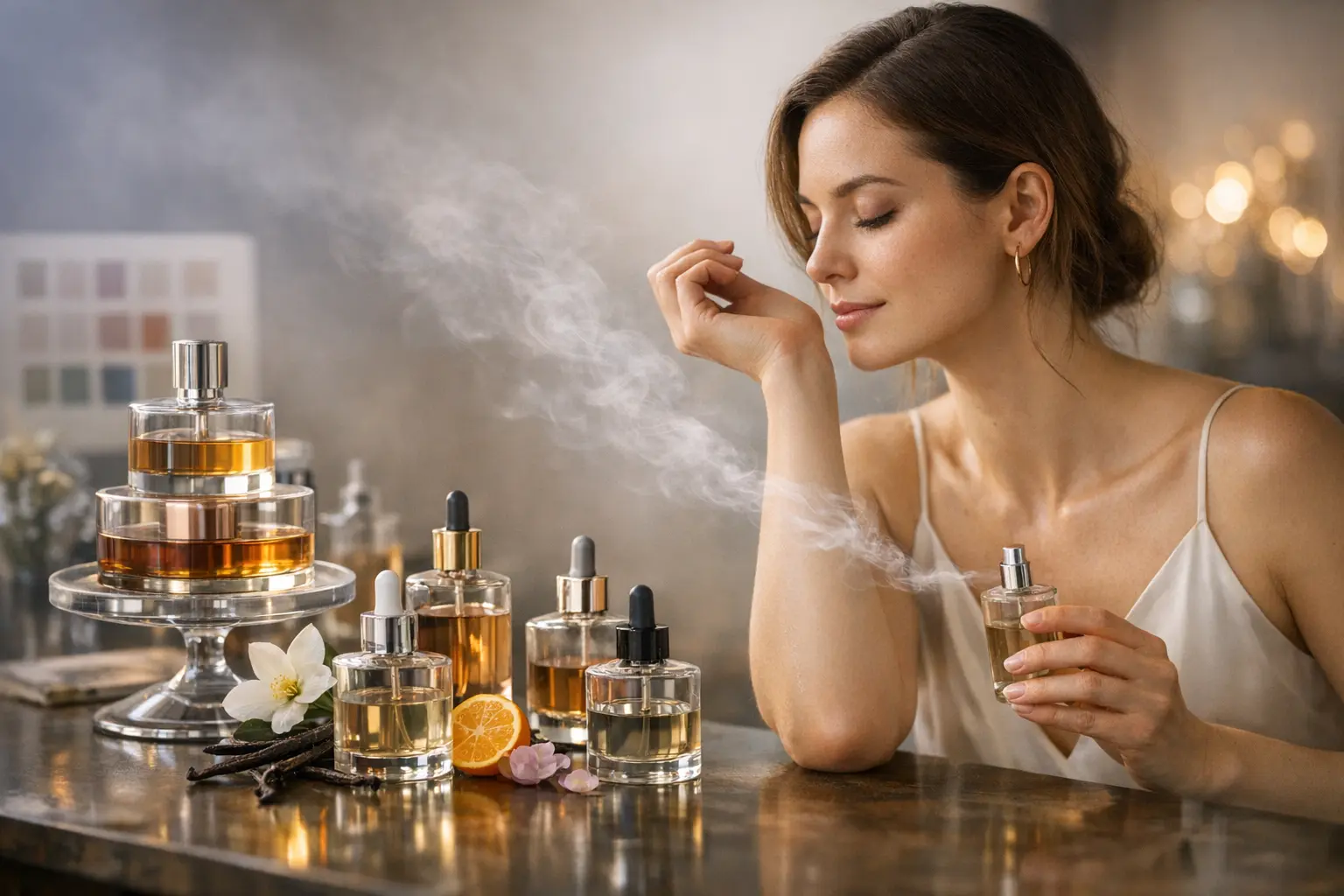
Fragrance layering isn’t just a beauty trick—it’s a practical way to build a recognizable scent identity that feels like you, evolves with your day, and adapts to seasons, settings, and moods. When you understand how notes behave on skin, how concentration and texture change projection, and how to combine accords with intention, you can move beyond “smelling nice” into owning a signature that’s quietly unforgettable.
Understanding the Art and Science of Personalized Fragrance Layering
Personalized fragrance layering sits at the intersection of artistry and chemistry. The “art” is the creative direction—what you want people to feel when they’re near you. The “science” is how aroma molecules evaporate, interact, and cling to skin, hair, and fabric.
Start with the structure of most fine fragrances: top notes, heart notes, and base notes. Top notes are lighter, more volatile molecules—think citrus, airy aromatics, and sparkling aldehydes. They bloom quickly and fade faster. Heart notes form the body (florals, spices, green notes) and typically last a few hours. Base notes are heavier molecules like woods, resins, musks, amber materials, vanilla, and some balsams—these linger the longest and often define your sillage (the trail you leave behind).
Layering works when you respect this evaporation curve. If you pile multiple bright top-heavy fragrances at once, you may get an exciting first five minutes… followed by chaos or a hollow dry-down. The most wearable layers often share a compatible base or a complementary contrast: crisp top + creamy base, floral heart + woody backbone, spice + clean musk.
Skin chemistry matters, but it’s often misunderstood. Skin doesn’t “change” a fragrance into a completely different perfume; it influences diffusion and longevity through temperature, moisture, and oils. Warm skin amplifies projection and can make sweet or resinous notes feel louder. Dry skin tends to “eat” top notes quickly and can make compositions feel quieter or sharper. That’s why moisturizing (unscented or lightly scented) can make a fragrance feel smoother and last longer—there’s more grip for aroma molecules.
Then there’s the environment. Humidity lifts diffusion and makes florals and sweet notes feel stronger. Cold air compresses projection and can make woods, ambers, and spices feel more comforting and noticeable up close. In other words, layering isn’t only about what you spray—it’s about when, where, and how you wear it.
Finally, recognize the difference between layering formats:
Same-scent layering (body wash + lotion + eau de parfum) boosts longevity and projection without changing the profile much.
Adjacent layering (two scents in the same family, like two musks or two woods) builds depth and nuance.
Contrast layering (for example, a crisp citrus over a smoky wood) creates individuality—high risk, high reward—when done with restraint.
Unpacking Scent Identity: Defining Your Olfactory Signature
Your scent identity is the consistent emotional “shape” of what you wear—not necessarily one bottle you wear forever. Think of it like a personal style uniform: you might change outfits, but the overall vibe remains recognizable.
To define yours, begin with the practical question: What do you want your fragrance to do? Do you want to feel polished and clean, magnetic and sensual, creative and unconventional, calm and grounded, or bright and social?
Here are a few scent identity archetypes that translate well into layering strategies:
The Clean Minimalist: musks, soft citrus, transparent florals, airy woods. Layering goal: keep lines crisp; avoid heavy sweetness.
The Warm Sophisticate: amber, vanilla, sandalwood, soft spices, suede. Layering goal: build a smooth, cohesive aura.
The Modern Romantic: rose, peony, jasmine, fruit accents, cashmere woods. Layering goal: add texture (musk/wood) so it doesn’t turn “too pretty.”
The Night Signature: incense, patchouli, leather, dark woods, dense florals. Layering goal: control projection; avoid suffocation in close spaces.
The Outdoorsy Fresh: herbs, green notes, cedar, pine, marine facets. Layering goal: keep it vibrant; avoid clashing sweet bases.
Next, identify your “non-negotiables” and “deal-breakers.” Non-negotiables might be a love for neroli, sandalwood, or iris. Deal-breakers might include heavy oud, powdery aldehydes, or syrupy gourmands. This sounds basic, but it saves time and prevents expensive mistakes—especially when layering, where one disliked note can dominate.
Also consider your life, not just your taste. Do you work in close quarters? Are you frequently outdoors? Do you attend formal events? A scent identity that fits your real routine will feel effortless rather than performative.
A useful way to articulate scent identity is through three adjectives. For example:
“Clean, creamy, modern.”
“Spiced, elegant, intimate.”
“Green, bright, energetic.”
Once you can describe your target in plain language, layering becomes a tool to dial those adjectives up or down depending on the day.
Essential Techniques for Effective Fragrance Layering
Layering that smells intentional is less about owning dozens of bottles and more about technique. The goal is clarity: a recognizable through-line with controlled complexity. Here are the methods professionals rely on.
Start with a “base anchor.” Choose one fragrance (or product) that forms the backbone—usually a skin scent musk, a soft amber, or a woody base. Anchors make layers feel blended rather than stacked. If your anchor is too loud, everything becomes “about” that anchor.
Use the “1 + 1, not 4 + 5” rule. Most successful everyday layers involve two primary scents. Three can work, but it requires experience and light application. More than that often creates muddiness—especially for others’ noses in real life.
Control dosage and placement. Layering doesn’t mean spraying the same number of sprays of two fragrances in the same spot. Try this practical approach:
Apply the heavier, longer-lasting fragrance first (often your base/anchor) with fewer sprays.
Add the brighter or more volatile fragrance second, closer to where you want lift (upper chest, back of neck, hairline—lightly).
Keep at least one zone “quiet” so the scent can breathe.
Let the first layer settle. Give the base 5–10 minutes to open and start drying down. Then add the second. Why? Because the opening of many fragrances is intentionally bright and diffusive; layering too quickly can create a sharp, competing top-note clash that disappears into something unpredictable later.
Think in textures, not just notes. People often layer “vanilla with vanilla” because it feels safe. Texture layering is smarter: pair a transparent musk with a creamy floral, or a dry cedar with a juicy fruit note. Texture creates dimension without requiring complexity.
Separate vs. blend application.
Blended layering means applying fragrances close together so they mingle in the air and on skin. This creates a unified aura.
Separated layering means placing different fragrances on different areas (for example, warm amber on torso, crisp citrus on wrists). As you move, you get a shifting profile—more dynamic, less “perfume cloud.” It’s also a way to wear a bolder base without overwhelming a room.
Use unscented products as performance enhancers. An unscented moisturizer or body oil can improve longevity and smoothness. For beginners, this is a clean way to layer without introducing competing accords.
Know your common clash zones. Not every combination fails, but some pairings are notoriously tricky:
Two dominant “signature” ambers can become syrupy and dense.
Sharp green aromatics can fight with sugary gourmands, creating a medicinal edge.
Big white florals layered with heavy smoke/incense can read dirty if overdosed.
The solution isn’t avoidance—it’s moderation and choosing a bridging note (a musk, soft wood, or airy citrus) to connect the two profiles.
Test in real conditions. Blotters are helpful, but your skin and your day determine success. Wear a new layer for a full day before judging. Ask yourself: does it stay coherent after three hours? Does it feel “loud” in meetings? Does the dry-down still feel like you?
Crafting Your Unique Scent Portfolio: Choosing the Right Combinations
A scent portfolio is a small, intentional wardrobe of fragrances and supporting products that let you create multiple “you” variations without starting from scratch each time. If your goal is personalized layering, a tight portfolio beats an overflowing shelf.
Build around three core roles:
1) The Anchor (Base Builder): a musk, wood, soft amber, or skin scent that layers with almost anything. This is your “glue.”
2) The Character (Signature Direction): the profile people might associate with you—your rose, your crisp citrus, your smoky incense, your cozy vanilla.
3) The Modifier (Mood or Occasion): a lighter fragrance that shifts the vibe: freshens, sweetens, sharpens, or darkens.
With just these roles, you can create many combinations while staying consistent.
Practical layering templates (with real-world applications):
Template A: Clean Musk + Citrus Lift
Best for: office, travel, warm weather, “I want to smell put-together but not perfumed.”
How it wears: the musk keeps it smooth and close; citrus adds brightness and approachability.
Tip: choose a citrus with a slightly woody or neroli backbone so it doesn’t vanish instantly.
Template B: Woody Base + Floral Heart
Best for: everyday signature, dates, events where you want elegance without heaviness.
How it wears: woods add structure; florals add personality and recognizability.
Tip: if the floral is loud, keep the wood subtle. If the wood is smoky, choose a creamy floral over a sharp one.
Template C: Amber/Vanilla + Fresh “Air” Note
Best for: cooler weather, evenings, cozy settings where you still want cleanliness.
How it wears: amber/vanilla reads intimate and warm; a fresh aromatic or soft citrus prevents it from feeling dense.
Tip: dose matters. One spray of amber with two light sprays of freshness often beats the reverse.
Template D: Leather/Smoke + Soft Musk
Best for: night, creative environments, when you want edge without aggression.
How it wears: musk rounds sharp corners and makes bold accords more wearable.
Tip: apply the bold scent lower on the body (torso) and the musk higher. That keeps the first impression cleaner.
Template E: Rose + Spice + Wood (the “tailored” signature)
Best for: formal events, cool evenings, situations where you want polish and depth.
How it wears: rose provides identity; spice adds intrigue; wood gives longevity and authority.
Tip: keep spice measured—too much can dominate and read like potpourri.
How to choose combinations that feel like you (not like a fragrance experiment):
Follow a “shared bridge” principle. The easiest layers share at least one connecting idea: a shared base (musk), a shared note family (woods), or a shared vibe (transparent, creamy, smoky). If two fragrances feel unrelated, you’ll need a bridge product—often a simple musk or wood—to connect them.
Decide what you want to amplify. Layering should solve a problem or meet a goal. Common goals include:
Make a fresh scent last longer (anchor with musk/soft wood).
Make a sweet scent feel more adult (add dry cedar, tea, or airy citrus).
Make a floral feel less “pretty” (add suede, incense, or clean woods).
Make a dark scent more daytime-friendly (add transparent musk or neroli).
Keep a simple layering journal. If you’re serious about building a scent identity, document your best layers. Note:
What you applied (and where).
Weather and setting.
How it smelled at 30 minutes, 3 hours, and end of day.
Compliments aren’t the goal, but they are useful data—especially if the same combo gets noticed repeatedly.
Don’t ignore hair and fabric—carefully. Hair holds scent well because it’s porous, but alcohol-based sprays can be drying. If you spray hair, do it lightly or use a hair mist. Fabric can extend longevity, but it can also “trap” heavy notes and make them feel stronger than intended. Try one spray away from delicate fabrics, and never assume a fragrance that’s perfect on skin behaves the same on wool or synthetic blends.
Example: building a week-ready scent portfolio without overbuying
If you want a consistent identity with flexibility, aim for:
One skin musk (anchor)
One crisp fresh (modifier)
One warm amber/wood (character for evenings)
One floral or spicy accent (character alternative)
With that, you can create a “signature family” that always feels related, even when the mood changes.
The Future of Personalized Fragrance: Trends, Technology, and Customization
Personalized fragrance is moving from niche to mainstream, and layering is at the center of that shift. Why? Because modern consumers want control: adjustable intensity, mood-based variation, and something that doesn’t smell like everyone else.
Trend 1: Modular fragrance wardrobes
Brands are increasingly designing scents meant to combine—often marketed as “wardrobe” collections or layering sets. While layering has always existed, the new angle is clarity: simpler structures, cleaner bases, and fewer competing facets so combinations stay readable. For the wearer, this means less trial-and-error and more predictable outcomes.
Trend 2: Skin scents and soft-projection perfumery
There’s renewed demand for intimate, close-wearing fragrances—musks, sheer woods, and soft ambers that feel refined rather than loud. These are ideal anchors for a scent identity because they blend with your natural warmth and support other layers instead of overpowering them. In a world where many people share spaces closely, “quiet luxury” in fragrance isn’t just aesthetic—it’s considerate.
Trend 3: Personalization through data and diagnostics
Customization is becoming more sophisticated: questionnaires that map preferences, in-store profiling, and digital tools that recommend note families based on what you already like. While no algorithm can replicate human taste perfectly, these systems can shorten your path to a portfolio that layers well—especially by highlighting your most compatible base families (musk-woods, amber-vanilla, citrus-aromatic, and so on).
Trend 4: On-demand and bespoke mixing
Refill stations, made-to-order concentrations, and boutique blending experiences are expanding. The most practical future direction isn’t novelty for novelty’s sake—it’s control over concentration and balance. Imagine choosing the same signature composition in a lighter daytime concentration and a deeper evening concentration, then using one or two modifiers to personalize it further. That’s scent identity built for real life.
Trend 5: Ingredient transparency and safety-forward formulation
Consumers are more informed and more sensitive to allergens and irritation. This is pushing brands toward clearer labeling and, in many cases, cleaner-feeling profiles. For layering, this matters because the more you apply, the more you want formulas that wear comfortably. If you’re prone to sensitivity, consider patch testing and favoring lower-spray, higher-quality application over frequent reapplication.
What won’t change: the fundamentals of good layering
No technology replaces the basics: compatible structure, thoughtful dosage, and patience during dry-down. Even in a future of custom blends, the most compelling scent identities will still come from restraint and consistency. The goal isn’t to smell like a different person every day—it’s to create a recognizable thread that feels personal, intentional, and adaptable.
Conclusion
Personalized fragrance layering is the most practical path to a lasting scent identity: it lets you create something distinctive without needing a single “forever” bottle, and it gives you control over mood, intensity, and occasion. When you understand evaporation (top/heart/base), respect texture and dosage, and build a small portfolio with an anchor, a character, and a modifier, your fragrance stops being an accessory and becomes part of your presence.
The real test is simple: do your layers still feel coherent after hours, and do they still feel like you? If you can answer “yes,” you’re not just layering fragrances—you’re authoring a signature.