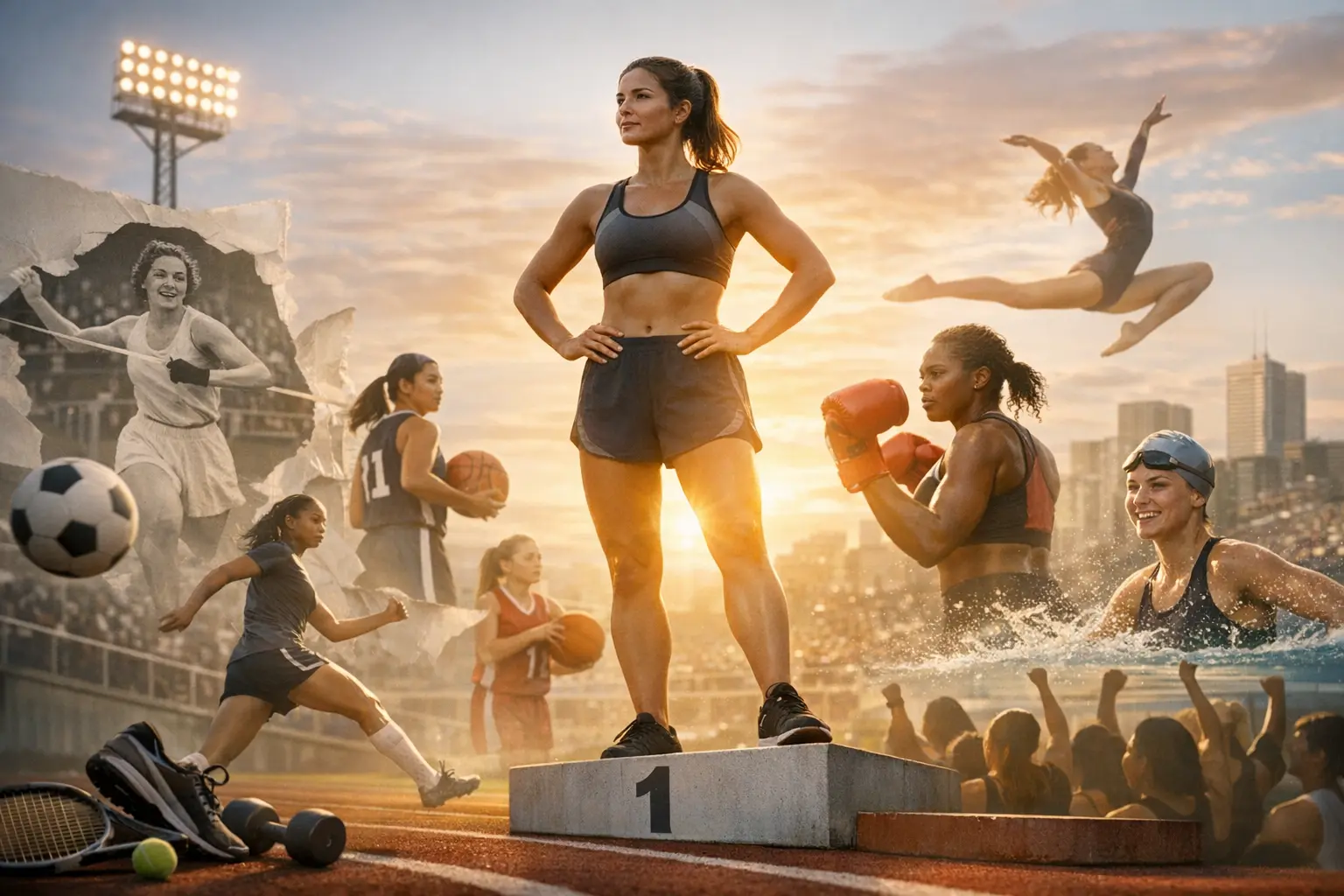
Women’s sports and fitness aren’t simply “having a moment”—they’re reshaping how we think about performance, health, identity, and opportunity. From the early pioneers who competed in restrictive clothing and restrictive rules, to today’s athletes commanding stadiums and shifting cultural norms, this revolution has been built on hard-won rights, evolving science, and a growing community that refuses to settle for less.
The Evolution of Women’s Sports: A Historical Perspective on Progress and Change
Women have always competed. The more accurate question is: when did society begin to recognize their competition as legitimate?
In the late 19th and early 20th centuries, women’s participation in organized sport was often framed as a health risk or a violation of “proper” femininity. Endurance, strength, and aggression were treated as inherently masculine traits, and women who chased performance were frequently criticized for it. Early sporting opportunities existed, but they were typically limited to sports deemed “acceptable,” such as tennis, golf, or certain forms of gymnastics—activities perceived as graceful and non-threatening.
Even as women entered international sport, progress came with strings attached. The modern Olympic Games initially excluded women entirely. When women’s events were eventually added, they were tightly controlled and frequently contested. Women’s distance running is a prime example: for decades, skeptics claimed longer distances were dangerous or unnatural for women. Reality—physiology, training adaptation, and performance—eventually overpowered myth, but only after athletes proved it on roads, tracks, and world stages.
As mid-century culture shifted, women’s sports began to expand, but unevenly. Access depended on geography, class, race, and local leadership. If a school or community valued girls’ athletics, pathways existed. If not, opportunities were scarce. Women’s professional leagues emerged sporadically, often underfunded and underpromoted, then collapsed because the ecosystem—media attention, sponsorship, and institutional support—wasn’t mature enough to sustain them.
Yet momentum kept building. Grassroots clubs, collegiate programs, and national teams gradually improved structures for training and competition. Coaching knowledge expanded. Strength and conditioning, once reserved for men, became more common in women’s programs. Notably, the shift wasn’t just about allowing women to play—it was about allowing women to pursue excellence.
Today, women’s sport is not a niche category; it is a global performance arena with its own legends, rivalries, and innovations. Records fall. New leagues launch with serious investment. And the conversation has moved beyond “Can women do this?” to the far more valuable questions: “What conditions help women thrive?” and “How do we build systems that keep talent in the sport?”
Breaking Barriers: The Impact of Title IX and Other Equality Legislation
If you want to understand why women’s sports participation exploded in the United States, you have to understand Title IX. Enacted in 1972, Title IX is often summarized as “equal opportunities in sports,” but its scope is broader: it prohibits sex-based discrimination in any education program or activity receiving federal financial assistance. That legal leverage forced institutions to treat women’s athletics as a right, not a courtesy.
The immediate effect was measurable: more girls’ teams, more budgets, more scholarships, and more structured pathways from youth sport to college competition. But the deeper impact was cultural. Title IX altered expectations. Families began to see sports as a normal part of a girl’s education. Schools began to plan for girls’ programs rather than treating them as optional.
Of course, laws don’t implement themselves. The years following Title IX included disputes over compliance, funding distribution, facility access, travel budgets, and coaching resources. Even today, equality is not uniformly achieved—particularly when you examine disparities in media coverage, staffing, and the quality of training environments. But legislation created a baseline standard that advocates could point to, enforce, and expand.
Outside the U.S., similar frameworks evolved through national sports policies, anti-discrimination laws, and international pressure. Governing bodies began to set requirements for women’s participation, invest in women’s national teams, and support long-term athlete development. Some countries moved quickly; others lagged. The pattern is consistent: when institutions are held accountable—legally, financially, or politically—opportunity expands.
One of the less-discussed benefits of equality legislation is its ripple effect on leadership. As women’s programs grew, so did demand for coaches, athletic trainers, sports medicine professionals, and administrators. Yet there’s a paradox: while women’s participation increased, women’s representation in coaching and leadership roles has not always kept pace, especially in high-status positions. That gap matters, because leadership influences policy, culture, and athlete welfare.
Actionable takeaway: if you’re involved in a school, club, or community program, don’t assume “having a girls’ team” equals equity. Ask sharper questions:
- Are practice times and facilities comparable to boys’ programs?
- Are athletes receiving equal access to athletic training, strength coaching, and sports medicine?
- Is travel safe and adequately funded?
- Are there leadership pathways for women—captains, coaches, officials, administrators?
Progress, in practice, is often a budgeting decision. Equality legislation gave communities a tool to make those decisions harder to ignore.
The Rise of Female Fitness: Trends, Influencers, and Lifestyle Changes
Women’s sports and women’s fitness overlap, but they are not the same. Sports are competitive; fitness is broader—health, aesthetics, longevity, stress regulation, identity, and community. In recent decades, women’s fitness has undergone its own revolution, and it has changed what we consider “normal” for female bodies and capabilities.
Early mainstream fitness culture for women frequently emphasized shrinking—smaller bodies, minimal muscle, controlled appetites. Cardio was marketed as the default. Strength training was often discouraged with outdated warnings about “bulking,” despite the reality that significant muscle growth requires specific training variables, adequate nutrition, and time—plus individual differences in hormones and genetics. As more women entered weight rooms and saw results—better posture, stronger joints, higher confidence—those myths weakened.
Today, the dominant trend is capability. Women train for strength, speed, power, mobility, and endurance—not simply appearance. This shift aligns with basic physiology: resistance training improves bone density, connective tissue resilience, metabolic health, and functional capacity across the lifespan. It also supports athletic performance, from sprint mechanics in soccer to shoulder stability in swimming.
Several forces accelerated this change:
- Accessible education: Coaches and clinicians share evidence-based training principles more widely than ever, translating complex concepts—progressive overload, recovery, periodization—into usable plans.
- Community-based training: Group strength classes, running clubs, women-only lifting spaces, and local sports leagues make consistency easier. People stick with habits when they feel seen.
- Technology: Wearables and apps help women track sleep, training load, and recovery. While not perfect, they encourage awareness of patterns that affect performance.
- Expanded identity: Fitness is no longer confined to one “look.” Powerlifting, climbing, combat sports, triathlon, yoga, dance, and hybrid training all have room in the same ecosystem.
Influencers played a role too—but the impact is mixed. At their best, they normalize strength, teach technique, and make training less intimidating. At their worst, they accelerate harmful comparisons, promote extreme dieting, or sell “one-size-fits-all” programs without considering injury history, menstrual health, or training age.
So how does a woman navigate modern fitness without getting pulled into noise? Use a simple performance filter:
- Prioritize progressive basics: A small set of movements done well—squats/hinges, pushes, pulls, carries, and locomotion—builds durable fitness.
- Match training to goals: Training for a half marathon isn’t the same as training to deadlift double bodyweight. Hybrid goals are possible, but they require smart scheduling and realistic expectations.
- Respect recovery: Fitness improves during recovery, not during the workout. Sleep, nutrition, and stress management are not “extras”; they’re the system.
- Track what matters: Keep a simple log: loads, reps, perceived effort, energy, and soreness. Over time, this becomes your personal coaching tool.
Another crucial evolution is the growing conversation about women-specific considerations in training—without falling into stereotypes. For example, the menstrual cycle can influence perceived exertion, thermoregulation, and recovery for some athletes. The key word is “some.” Rather than rigid rules, the modern approach is individualized: monitor patterns and adjust training when needed. That’s not weakness; it’s high-level self-coaching.
Ultimately, the rise of female fitness is about autonomy. Women aren’t waiting for permission to be strong. They’re building strength on their own terms.
Championing Representation: Media Coverage and the Role of Brand Sponsorship
Visibility is not a vanity metric. In sport, visibility determines funding, participation, and the cultural permission to dream bigger.
For years, women’s sports suffered from a circular problem: limited coverage led to limited audience growth, which led to limited sponsorship, which led to limited professional opportunities—reinforcing the idea that women’s sports were “less marketable.” The reality is that markets respond to investment. When broadcasters commit to consistent coverage, storytelling, and prime placements, audiences follow. When brands invest beyond token campaigns—supporting leagues, athletes, and grassroots programs—ecosystems stabilize.
Representation matters in the details. Are women athletes framed as competitors or as lifestyle props? Are broadcasts focused on tactics, skill, and rivalry, or filtered through commentary on appearance and personal lives? Serious coverage treats women’s sports with the same analytical rigor: breakdowns of strategy, athlete development, and performance trends. That kind of treatment attracts serious fans.
Brand sponsorship plays a second, often underappreciated role: it influences what young athletes believe is possible. When a teenager sees a woman athlete featured for her accomplishments—contract, signature shoe, national campaign—it signals that sport can be a viable path, not just a hobby.
But sponsorship also comes with responsibility. Brands shape training culture, body image, and health narratives. The best campaigns align with performance and wellbeing: fueling properly, training progressively, and valuing longevity over quick fixes. The worst ones commodify insecurity.
For athletes and creators navigating sponsorship, a few practical principles help:
- Protect credibility: Promote products you would use without the contract. Audiences can detect mismatch instantly.
- Read the fine print: Know usage rights, exclusivity clauses, and the duration of content ownership. A “simple” post can tie up your image for years.
- Negotiate beyond money: Ask for support that improves performance—travel budgets, coaching resources, equipment, or funding for community clinics.
- Think long-term: The best partnerships support your story across seasons, not just a single campaign cycle.
Media and sponsorship also intersect with representation across race, body type, sexuality, disability, and socioeconomic background. Women’s sports are not a monolith. When coverage and brand investment broaden, participation broadens too—because more people can see themselves in the arena.
Ask yourself: how often do you share women’s sports clips, buy tickets, or stream matches? Fan behavior is part of the equation. The revolution isn’t only powered by athletes and institutions; it’s reinforced by everyday choices.
Empowering the Next Generation: Building Communities and Encouraging Participation in Women’s Sports
The next phase of the women’s sports & fitness revolution won’t be won primarily on professional stages—it will be won in schools, local clubs, community centers, and family routines. That’s where confidence is built, skills are learned, and dropout is prevented.
Youth sports dropout among girls is often driven by predictable obstacles: limited access, cost, lack of safe environments, social pressure, body image concerns, and coaching that prioritizes winning over development. Fixing this doesn’t require a perfect system; it requires intentional design.
Here’s what works in real communities:
1) Create low-barrier entry points.
Not every girl wants an elite travel team. Offer recreational leagues, short skill clinics, and “try-it” days where beginners can experiment without pressure. Keep equipment available to borrow. Reduce the fear of looking inexperienced—because that fear is real, and it’s powerful.
2) Coach for competence, not just competition.
Good coaching is more than enthusiasm. It’s teaching fundamentals, giving clear feedback, and building psychological safety. Athletes should feel free to make mistakes while learning. When coaching is built around competence—basic movement skills, sport IQ, and confidence—performance follows.
3) Normalize strength and injury prevention early.
This is where science quietly changes outcomes. Simple strength training and landing mechanics can reduce common injury risks and improve performance. Think of it as “athletic durability”: stronger hips, stable knees, resilient ankles, and better trunk control. It doesn’t have to be complicated—two short sessions a week of well-coached basics can be transformative.
4) Build community around the sport.
People stay where they feel they belong. Teams that foster connection—mentorship between older and younger players, family involvement, group goals—retain athletes longer. Consider pairing high school athletes with youth teams for clinics. Visibility and mentorship collapse the distance between “beginner” and “athlete.”
5) Support the whole athlete: scheduling, fueling, and mental load.
Girls and young women often juggle school, jobs, family responsibilities, and social pressures. Programs that respect time constraints—predictable schedules, clear communication, reasonable travel—remove silent barriers. Encourage fueling for performance rather than restriction. Teach basics such as hydration, carbohydrate needs for training, and the role of protein in recovery. These lessons pay dividends for life, not just sport.
6) Make space for girls who don’t fit stereotypes.
Some girls are loud, competitive, and fearless. Others are quiet, analytical, or late bloomers. Many fall somewhere in between. The goal is not to force a personality type; it’s to offer a structure where different types can thrive. If a program only celebrates one “ideal athlete,” it will lose talent.
Parents, educators, and community leaders have outsized influence here. A parent who treats sport as a valuable commitment—not a disposable after-school activity—helps a child take herself seriously. A school that funds girls’ programs properly signals that girls’ effort matters. A local business sponsoring uniforms creates momentum that outlasts a single season.
And for women entering sports later in life—yes, that’s part of the next generation too—community matters just as much. Adult leagues, beginner lifting groups, women’s cycling meetups, and running clubs offer something many women were denied when they were younger: a place to develop athletic identity without apology. Why should sport be something you “age out” of?
The most powerful communities share a simple trait: they celebrate participation while still respecting ambition. They make space for the woman training for her first 5K and the athlete chasing a podium—without diminishing either.
Conclusion
The women’s sports & fitness revolution is not a trend line; it’s a structural shift. It has been driven by pioneers who competed when the world wasn’t watching, by legislation that turned access into a right, by a cultural redefinition of female strength, and by growing visibility that finally matches the level of performance on the field.
Now the responsibility is collective. Support the leagues and athletes with your attention and your dollars. Push for equitable resources in schools and clubs. Encourage strength, skill development, and smart recovery as normal—not exceptional. And most importantly, help build communities where girls and women can start, restart, and stay in sport.
Because the real measure of progress isn’t only championships or ratings. It’s how many women feel free to chase their physical potential—and how many systems exist to help them get there.