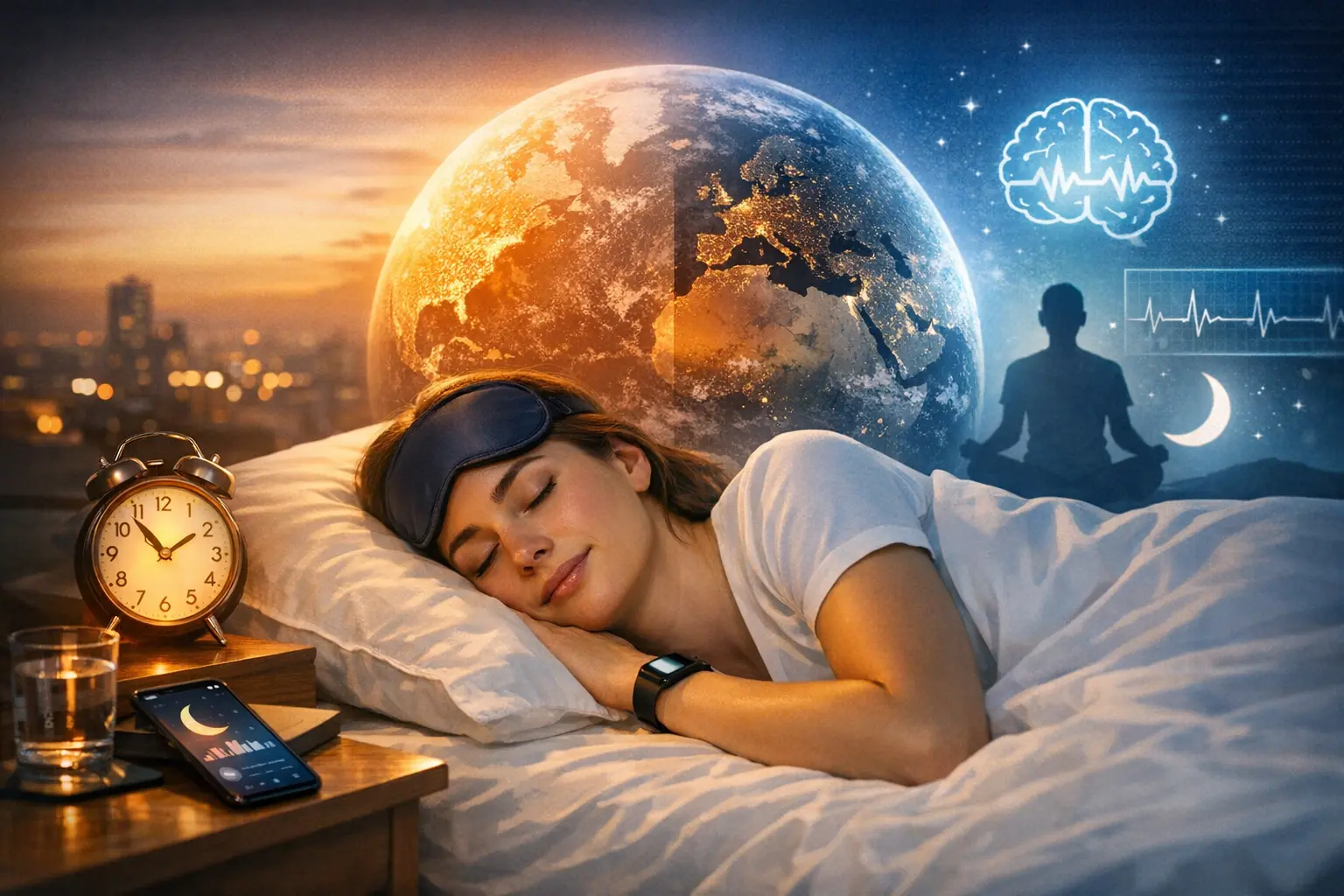
Sleep health is not just about “getting enough hours”—it’s about aligning your biology with the timing cues that govern energy, mood, appetite, and recovery. When your circadian rhythm is supported, sleep becomes deeper, mornings feel steadier, and your body handles stress with more resilience; when it’s disrupted, even long nights can feel unrefreshing.
Understanding the Basics of Sleep Health and the Circadian Rhythms
Sleep health has three pillars: quantity, quality, and consistency. Quantity is the easiest to understand—most adults function best with roughly 7–9 hours. Quality includes how quickly you fall asleep, how often you wake, and whether you feel restored. Consistency is the often-missed factor: the same sleep and wake times most days of the week.
Your circadian rhythm is the internal timing system that orchestrates these pillars. Think of it as a 24-hour program running in the background, coordinating when you feel alert, when your body temperature shifts, when hormones rise and fall, and when you feel hungry. It is not “in your head” as a preference—it is physiological timing rooted in your brain and echoed in virtually every organ.
At the center is a small region in the brain that responds to light exposure, especially morning light. Light is not merely visual information; it’s a biological signal. When bright light hits your eyes early in the day, your body receives a powerful message: it’s morning, start the daytime chemistry. Evening light, especially bright or blue-enriched light, can deliver the opposite message: stay awake, delay sleep.
Two processes primarily shape sleep:
1) Circadian drive: This is the clock-based rhythm of alertness and sleepiness across the day. Many people experience a natural dip in the early afternoon and a strong wave of sleepiness at night.
2) Sleep pressure: This builds the longer you’re awake. It’s like a biological “tiredness meter” that fills throughout the day and empties during sleep. Napping drains the meter; being active and awake fills it faster.
When these processes align—high sleep pressure plus circadian “nighttime”—sleep is easier and deeper. When they misalign, you can be exhausted and still struggle to fall asleep, or you may wake too early and feel wired.
Circadian rhythms also influence key hormones. Melatonin rises in the evening when it’s dark, helping the body transition into nighttime physiology. Cortisol tends to rise in the hours before waking, supporting alertness and mobilizing energy. Importantly, cortisol is not “bad”—it’s essential. The issue is timing: cortisol that spikes at 2 a.m. can feel like anxiety and can fragment sleep.
Chronotype—whether you’re naturally more of an early bird or night owl—adds another layer. Chronotype has a genetic component and shifts with age (teens skew later; many older adults skew earlier). You can nudge it, but you can’t fully override it without consequences. A realistic goal is not to become someone else, but to support your own rhythm with smart cues.
The Impact of Modern Life on Sleep Quality and Circadian Wellness
The modern environment is uniquely effective at disrupting circadian alignment—and it does so subtly. You might still “sleep,” but the architecture and timing of that sleep can degrade over time.
Light at the wrong time. Indoor lighting after sunset, bright screens inches from your face, and streetlights filtering into bedrooms all reduce the contrast between day and night. Your circadian clock needs a clear signal: bright days and dark nights. Many people now live in the opposite—dim days indoors and bright nights on screens.
Social jet lag. If you wake at 6:30 a.m. on weekdays but sleep until 10:00 a.m. on weekends, you’re effectively moving time zones twice a week. That shift can delay your circadian rhythm, making Sunday night sleep difficult and Monday morning brutal. Over time, it can create a persistent feeling of sleep debt even if total weekly hours look “okay” on paper.
Caffeine creep. Caffeine has a long half-life for most people. That means the latte at 3 p.m. can still be affecting your nervous system at bedtime. Even if you can fall asleep, caffeine can reduce deep sleep and increase lighter stages, leading to more micro-awakenings you may not remember—but your body feels them.
Stress without recovery windows. Your brain and body are built to handle stress, but not constant stimulation. Work messages at night, nonstop news, and high-pressure schedules keep your threat-detection systems active. If your nervous system doesn’t downshift in the evening, sleep becomes shallow and easily interrupted.
Irregular meals and late eating. The circadian system also responds to food timing. Late-night heavy meals can shift internal rhythms, increase reflux risk, raise body temperature, and compete with the body’s nighttime repair processes. You can be in bed, but your metabolism is still “on duty.”
Alcohol as a sedative. Many people use alcohol to fall asleep faster. It can shorten sleep onset, but it often fragments the second half of the night as it’s metabolized. The result can be early waking, dehydration, and reduced REM—the stage strongly tied to emotional processing and memory integration.
Sedentary days. Movement and daylight exposure are major regulators of circadian stability. If your day involves little outdoor time and minimal physical activity, you may feel tired—but not sleepy at the right time. The body thrives on rhythmic contrasts: activity versus rest, bright versus dark, social engagement versus quiet.
Here’s the key question: if sleep is “free,” why does it feel so hard to get right? Because sleep isn’t a single behavior. It’s the outcome of a full day of inputs—light, movement, stress, food, and timing—playing either in sync or in conflict.
Practical Strategies for Optimizing Your Sleep Environment and Routine
You don’t need a perfect routine. You need a repeatable one. The body responds best to stable signals, and small improvements compound quickly.
1) Anchor your wake time. If you change only one thing, make it this. Pick a wake time you can maintain at least 5–6 days per week. A consistent wake time stabilizes your circadian rhythm, strengthens sleep pressure, and makes bedtime naturally easier.
2) Get outdoor light early—ideally within 60 minutes of waking. Morning daylight is the most potent circadian cue. Even 10–20 minutes outside (longer on cloudy days) can improve daytime alertness and advance melatonin onset at night. If you can combine this with a short walk, even better—the brain reads “daytime” more clearly when light and movement occur together.
3) Make nights darker and quieter than you think you need. Your bedroom should signal “cave,” not “studio.” Prioritize:
- Darkness: Blackout curtains or a comfortable sleep mask if streetlights leak in.
- Silence: Earplugs or a consistent white noise source if you’re in a noisy environment.
- Cool temperature: Many people sleep best in a slightly cool room. A cooler environment supports the natural drop in core body temperature associated with sleep onset.
4) Build a 30–60 minute wind-down that reduces stimulation. A wind-down is not about perfection; it’s about signaling. Choose two or three practices you can repeat:
- Dim lights and avoid overhead bright lighting.
- Put your phone on charge outside the bedroom or use “do not disturb.”
- Light stretching, a warm shower, or calm breathing to downshift the nervous system.
- Reading something non-work-related on paper or an e-ink reader.
5) Manage caffeine with a clear cutoff. Many adults do best with caffeine before noon or early afternoon. If you’re sensitive, move the last dose earlier by 1–2 hours each week until sleep improves. If you “need” caffeine late in the day, it may be a sign your sleep is under-recovered or your circadian rhythm is delayed.
6) Use naps strategically. Naps can be helpful, but they’re easy to misuse. If you nap too long or too late, you drain sleep pressure and sabotage bedtime. A practical rule:
- Power nap: 10–20 minutes, early afternoon.
- Recovery nap: 60–90 minutes (a full cycle) only when necessary, and not late in the day.
7) Align exercise with your goals. Regular exercise improves sleep depth and mood regulation. Timing matters for some people:
- Morning/daytime training: Often supports earlier sleep timing and stronger circadian signals.
- Evening training: Can be fine if it doesn’t leave you wired; allow a buffer and avoid intense sessions right before bed if you struggle with sleep onset.
8) Keep meals earlier when possible. You don’t need rigid rules, but if you’re dealing with reflux, night waking, or restless sleep, try moving your last substantial meal earlier by 2–3 hours. If you need something closer to bed, keep it light and easy to digest.
9) Have a plan for middle-of-the-night awakenings. Waking briefly is normal. The problem is what happens next. If you check the time, grab your phone, or start problem-solving, you train your brain to associate night waking with stimulation. A better approach:
- Keep lights low.
- Avoid clock-watching.
- Try a calm breathing pattern or a short body scan.
- If you’re wide awake after ~20 minutes, get up and do something quiet in dim light until sleepy again.
10) Protect your bed as a cue for sleep. If your bed becomes a place for emailing, scrolling, arguing, or stressing, your brain learns that bed equals alertness. Use the bed for sleep and intimacy; keep work and entertainment elsewhere when you can.
Real-world example: if you’re a parent or shift worker, you may not control total sleep time every night. In that case, focus on circadian anchors (consistent wake time on non-shift days, morning light when possible, and a reliable pre-sleep routine) and improving the sleep you can get (darkness, cool room, and fewer disruptions).
Exploring the Connection Between Sleep, Mental Health, and Physical Well-Being
Sleep is not a passive “shutdown.” It’s active, organized recovery. When sleep is disrupted, it doesn’t just cause fatigue; it changes how your brain processes emotion, how your body regulates inflammation, and how your metabolism handles energy.
Mental health and emotional regulation. One of sleep’s key roles is emotional recalibration. With insufficient or fragmented sleep, the brain becomes more reactive to stress and less able to apply brakes to anxious or negative thought loops. That’s why a poor night can make small problems feel disproportionately heavy the next day.
REM sleep, in particular, is closely tied to emotional processing and memory integration. When REM is reduced—often by alcohol, irregular schedules, or chronic sleep restriction—many people notice increased irritability, lowered frustration tolerance, and a harder time “letting go” of emotional experiences.
Focus, learning, and decision-making. Deep sleep supports physical restoration and memory consolidation. Without enough deep sleep, you may feel mentally foggy, slower to recall details, and more prone to mistakes. Over time, chronic sleep loss can erode motivation and increase procrastination—symptoms many people mistake as purely psychological when sleep physiology is a major contributor.
Immune function and inflammation. During healthy sleep, the immune system performs maintenance tasks, regulating inflammatory signaling. Inadequate sleep can tilt the body toward a more inflammatory state. Practically, that can look like more frequent illnesses, slower recovery from training, or persistent aches that don’t match your activity level.
Metabolic health and appetite. Sleep influences hunger and satiety signals and the brain’s reward sensitivity. After short sleep, many people experience increased cravings for calorie-dense foods and more impulsive snacking—not because of a lack of willpower, but because the brain is seeking quick energy and reward. Combine that with late-night screen time and stress, and the cycle reinforces itself.
Cardiovascular effects. Sleep is when blood pressure typically dips and the nervous system shifts toward parasympathetic recovery. If sleep is consistently short or fragmented, that nightly “reset” can be blunted. Over months and years, this can contribute to a less resilient cardiovascular profile.
Pain and physical recovery. Poor sleep increases pain sensitivity and slows tissue recovery. If you have chronic pain, sleep disruption can amplify symptoms; if you’re an athlete or exercising regularly, inadequate sleep can reduce performance and increase injury risk.
A practical takeaway: when you improve sleep, you often improve multiple “separate” problems—mood, cravings, focus, training recovery—because they were never separate in the first place. This is why sleep is frequently the highest-leverage health intervention available.
If you’re experiencing persistent insomnia, loud snoring with daytime sleepiness, gasping at night, or symptoms of depression or anxiety that feel unmanageable, consider professional evaluation. Sleep apnea, restless legs, circadian rhythm disorders, and clinical mood conditions are common, treatable, and often underdiagnosed. Optimizing habits helps—but it shouldn’t replace medical care when red flags are present.
Innovative Approaches and Technologies for Tracking and Improving Sleep Patterns
Technology can be useful—if you use it to guide behavior rather than fuel obsession. The goal is not “perfect sleep scores.” The goal is better outcomes: steadier energy, better mood, improved performance, and fewer nights of struggle.
Wearables and sleep tracking. Rings, watches, and bands estimate sleep stages using movement and heart signals (like heart rate variability). They’re directionally helpful for trends: are you sleeping longer, waking less, or stabilizing bedtime? They are less reliable for precisely identifying stages night-to-night. Treat stage data as an estimate, not a diagnosis.
What tracking is excellent for:
- Identifying inconsistent schedules and social jet lag.
- Noticing how alcohol, late meals, or stress affect night waking.
- Measuring whether changes (earlier caffeine cutoff, darker room) improve continuity.
What tracking can backfire on:
- Creating anxiety about sleep performance.
- Over-focusing on stage percentages rather than how you feel and function.
If you notice that checking metrics increases stress, simplify. Look at weekly averages once or twice a week rather than daily scores.
Smart lighting and circadian design. Adjustable lighting that becomes brighter and cooler in the morning and dimmer and warmer at night can reinforce circadian cues—especially for people who work indoors. This is not a replacement for outdoor daylight, but it helps reduce the “dim day, bright night” problem.
Actionable setup:
- Use bright, cooler light earlier in the day in work areas.
- Use warm, dim lamps after sunset; avoid harsh overhead lights at night.
- Keep the bedroom as dark as possible.
Blue-light management. Blue-light blocking glasses and screen filters can be helpful, particularly if you must use screens at night. However, brightness and content matter too. A bright screen and stimulating content can delay sleep even if “blue light” is reduced. Lower brightness, increase distance, and choose calmer activities in the final hour.
Sound technology. White noise, pink noise, or nature sounds can support sleep continuity by masking unpredictable noise. This can be especially effective in cities or shared households. The key is consistency at a safe volume—loud enough to mask disruptions, not loud enough to become a stressor itself.
Temperature regulation. Cooling mattresses, breathable bedding, and smart thermostats can improve sleep for people who wake overheated. Overnight thermoregulation is closely tied to sleep stability. If you often wake at 3–4 a.m. feeling hot, focus on bedding materials, room temperature, and airflow before assuming it’s purely stress-related.
Behavioral apps and digital CBT-I tools. Cognitive Behavioral Therapy for Insomnia (CBT-I) is a structured approach that targets the behaviors and thought patterns that maintain insomnia. Digital programs can offer sleep scheduling, stimulus control, and relaxation training in a guided format. For persistent insomnia, this approach is often more effective long-term than sedative reliance because it retrains sleep systems rather than suppressing them.
Light therapy and circadian shifting. For people with delayed sleep timing (night owls who need earlier schedules), timed morning bright light and consistent wake time can gradually shift rhythm earlier. Conversely, for advanced sleep timing (getting sleepy too early), evening light exposure and carefully timed routines can help. Timing is everything—used incorrectly, light can shift you the wrong way.
The most overlooked “technology”: your calendar. Sleep thrives on protected time. If your evenings are packed with work, social commitments, and screen-based decompression, the problem might not be your mattress—it might be that sleep has no space. Scheduling a realistic wind-down and a non-negotiable wake time often outperforms any gadget.
Conclusion
Sleep health and circadian wellness are less about chasing a perfect bedtime and more about building strong daily cues: bright mornings, dim evenings, consistent timing, a calm pre-sleep runway, and a bedroom that makes sleep easy. Modern life quietly erodes those cues through late light, irregular schedules, stress, and stimulants—but the solution is not complicated; it’s strategic.
Start with the highest-leverage moves: anchor your wake time, get morning outdoor light, reduce evening brightness and stimulation, and protect your sleep environment. Track trends if it helps, but prioritize how you feel and function. When your circadian rhythm is supported, sleep becomes a reliable foundation—one that improves mental clarity, emotional resilience, and physical recovery in ways you’ll notice every single day.

