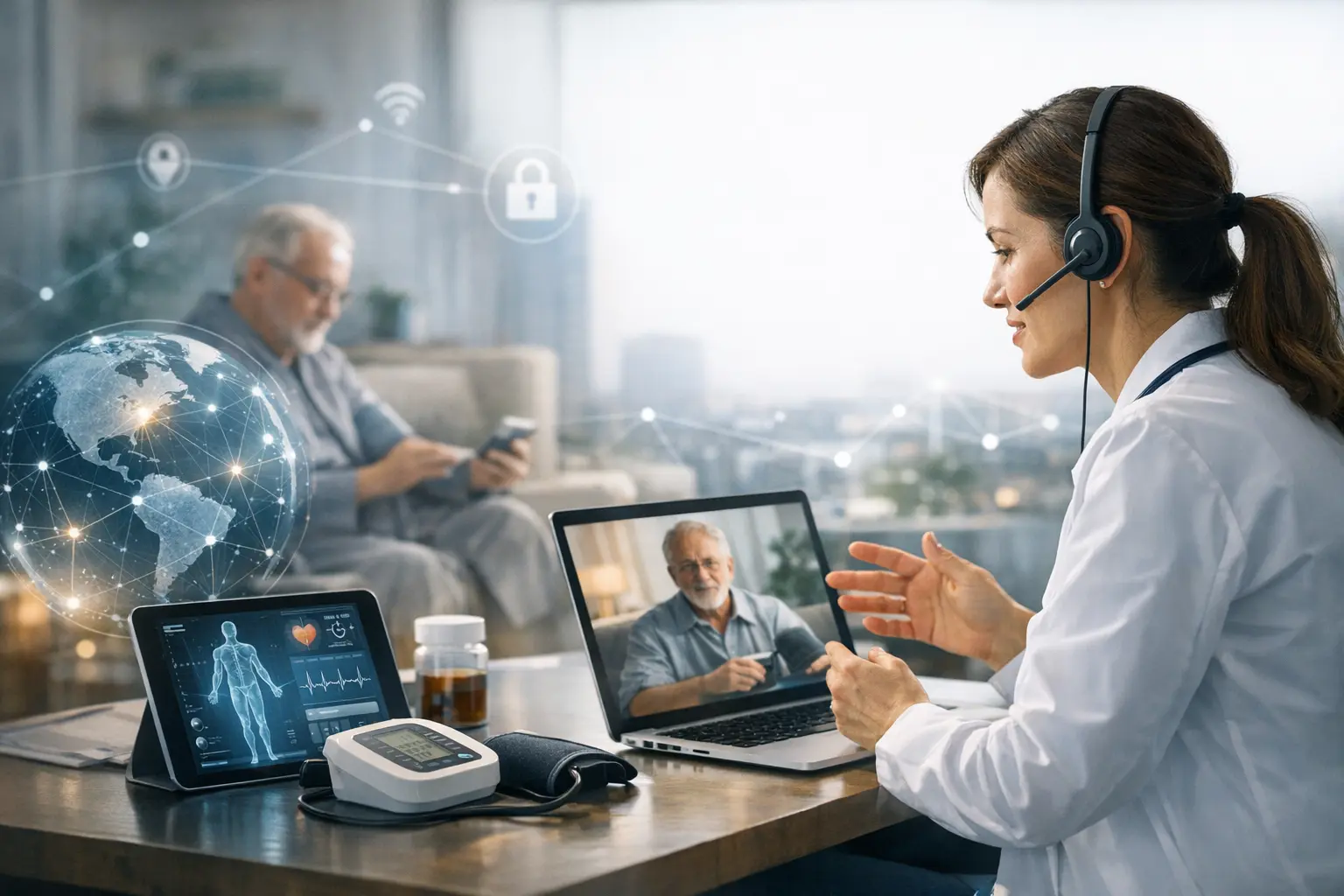
Telehealth has moved from a convenient add-on to a core way people access healthcare—often faster, safer, and more flexible than traditional visits. But “remote care” isn’t a single tool or a one-size-fits-all service; it’s an ecosystem of clinical models, technologies, regulations, and communication skills that can either elevate care quality or quietly undermine it. This guide breaks down how telehealth really works, where it struggles, and what’s next for digital-first healthcare.
Mastering Telehealth: A Deep Dive into Remote Care Services
Telehealth is best understood as a new “front door” to healthcare—one that can open into routine primary care, chronic disease management, urgent triage, mental health services, postoperative check-ins, medication management, and more.
At its strongest, telehealth offers three clear advantages: accessibility, continuity, and efficiency. Accessibility means patients get care without travel, childcare logistics, or long office waits. Continuity means follow-ups and monitoring happen more reliably, especially for chronic conditions where small changes matter. Efficiency means clinicians can reserve in-person capacity for exams and procedures that truly require physical touch or diagnostics.
But mastery requires recognizing telehealth’s limits. Remote care can’t palpate an abdomen, listen to lung fields directly, or run a rapid strep test through a screen. The highest-performing telehealth programs don’t pretend otherwise; they build clear protocols for when to escalate to in-person visits, imaging, labs, or emergency services.
Consider a common scenario: a patient with high blood pressure. Remote care can be exceptional here—if it’s structured correctly. A clinician might begin with a video visit, verify a validated home blood pressure cuff, ask the patient to demonstrate proper measurement technique, and then implement a monitoring plan with scheduled check-ins. Over time, patterns emerge: morning spikes, medication adherence gaps, or lifestyle triggers. This kind of longitudinal view can be harder to achieve with sporadic office visits alone.
Telehealth also changes the “where” of care. Instead of visiting a clinic, the patient is often at home—surrounded by their actual environment. That environment provides clinical clues: medication bottles on the counter, trip hazards for older adults, food choices in the pantry, or stressors that appear during a behavioral health session. Remote care can be more human and contextual when clinicians know how to look.
What does a mature telehealth service look like in practice?
It’s integrated. Scheduling, charting, billing, and follow-up orders flow through the same system as in-person care, minimizing fragmentation.
It’s protocol-driven. Nurses and clinicians use standardized intake questions, red-flag criteria, and escalation pathways so care quality doesn’t depend on guesswork.
It’s patient-ready. Clear instructions, tech checks, and supportive staff reduce missed appointments and frustration.
It’s outcomes-focused. The goal isn’t just “more visits”; it’s better control of conditions, faster issue resolution, and improved patient experience.
Remote care works best when it’s treated as clinical care—because it is. The next step is understanding what telehealth actually includes and how its models differ.
Unpacking Telehealth: Definitions, Models, and Technologies
People often use “telehealth” and “telemedicine” interchangeably, but the distinction matters. Telemedicine usually refers to clinical services delivered remotely (diagnosis, treatment, prescribing). Telehealth is broader, covering clinical care plus education, administrative meetings, care coordination, and remote monitoring.
Within telehealth, several service models dominate modern programs:
Synchronous visits (real-time video or phone)
This is the classic “virtual appointment.” Video is preferred for many conditions because visual cues—breathing effort, rashes, swelling, mental status, affect—improve clinical assessment. Phone visits remain important for accessibility and certain follow-ups, especially when video fails or bandwidth is limited.
Asynchronous care (store-and-forward)
Patients send photos, messages, or questionnaires that clinicians review later. Think dermatology photo reviews, medication refills, or symptom questionnaires. Asynchronous care can reduce wait times and is well-suited to conditions where high-quality images and structured histories are sufficient.
Remote patient monitoring (RPM)
RPM involves collecting health data outside the clinic—blood pressure, glucose, weight, pulse oximetry, heart rate, sometimes ECG—then transmitting it to a care team. The clinical value comes from trends over time, not a single reading. A one-off glucose value is a snapshot; a month of readings is a story.
Virtual-first care and hybrid care
Virtual-first means telehealth is the default entry point, with in-person used as needed. Hybrid care blends remote and in-person strategically—for example, virtual check-ins between physical visits for diabetes, postpartum care, or mental health.
eConsults and provider-to-provider telehealth
Not all telehealth involves a patient. Primary care clinicians can consult specialists electronically, improving access and reducing unnecessary referrals. This can be particularly valuable in rural or underserved areas.
Now, the technologies that make these models work:
Video platforms with clinical features
Beyond basic video, healthcare platforms often include waiting rooms, identity verification, documentation tools, consent capture, and secure messaging. Reliability matters; a glitchy platform undermines trust and can impact clinical quality.
Patient portals and secure messaging
Portals allow patients to see results, request refills, complete pre-visit forms, and message their care team. When used well, messaging reduces unnecessary visits while keeping patients supported.
Digital intake and triage tools
Structured symptom checklists and questionnaires standardize the history-taking process and flag red-flag symptoms. The key is designing them to be clinically meaningful rather than merely long.
Connected devices (home diagnostics)
Validated cuffs, pulse oximeters, thermometers, glucometers, and scales extend the exam into the home. Some programs also use digital stethoscopes or otoscopes in specific settings (like home health or school-based clinics), but these require training and infrastructure.
Electronic health record (EHR) integration
Without integration, telehealth creates “shadow charts” and missing context. With integration, clinicians can see medication lists, allergies, prior labs, and problem histories—critical for safe decision-making.
At this point, many organizations have the tools. The harder question is: can they deliver telehealth that’s equitable, private, and clinically reliable? That’s where challenges—and solutions—become essential.
Addressing Challenges in Telehealth: Accessibility, Privacy, and Quality of Care
Telehealth expands access for many, but it can unintentionally widen gaps for others. The difference is rarely about intention; it’s about design.
Accessibility: beyond “does the patient have Wi‑Fi?”
Access barriers include lack of broadband, limited data plans, older devices, low digital literacy, sensory impairments, language differences, and unstable housing situations. Even patients with technology may struggle with app downloads, account logins, or camera permissions.
Practical fixes that consistently improve access:
Offer multiple modalities. If video fails, have a smooth path to phone. Don’t treat phone as “lesser care” when it’s clinically appropriate.
Use simple workflows. One click to join is better than a multi-step login. If security steps are required, make them understandable.
Provide tech support. A short pre-visit tech check can salvage an entire day’s schedule.
Design for disabilities. Captioning, screen-reader compatibility, and clear audio matter. For hearing-impaired patients, secure text-based options may be essential.
Plan for language access. Interpreter integration in virtual visits should be as routine as it is in-person. “We couldn’t get an interpreter” should not be a recurring excuse.
Privacy: the clinical room is now the patient’s home
Privacy concerns in telehealth are both technical and situational. Technically, care must be delivered through secure platforms and compliant workflows. Situationally, patients may be in shared housing, at work, or in a car—hardly ideal for sensitive conversations.
Clinicians can protect privacy with simple, repeatable steps:
Start every visit by confirming privacy. “Are you somewhere you can talk comfortably? Is anyone else in the room?” This isn’t small talk; it’s safety.
Offer alternatives. If a patient can’t speak openly, switch to chat for certain details, reschedule, or provide a safe planning approach—especially in behavioral health or intimate partner violence risk scenarios.
Use headphones and encourage patients to do the same. This single step reduces unintended disclosure dramatically.
Document consent appropriately. Patients should understand what telehealth can and cannot guarantee, including how data is handled.
Quality of care: avoiding the “virtual shortcut” trap
Quality isn’t automatically better or worse remotely; it depends on clinical fit and process design. Telehealth can fail when it becomes an assembly line: rushed histories, incomplete exams, poor follow-up, and inconsistent documentation.
Common quality pitfalls include:
Overreliance on symptoms without objective data. For example, treating shortness of breath without a pulse oximeter reading when one is readily available can lead to missed severity.
Inappropriate prescribing. Remote visits can increase pressure to prescribe antibiotics “just in case.” Strong stewardship protocols protect both patients and public health.
Fragmentation and poor continuity. If patients bounce between random clinicians, important context is lost. Continuity improves diagnostic accuracy over time.
Failure to escalate. Remote care must have clear triggers for in-person exams, imaging, labs, or urgent/emergent referral.
Concrete ways to safeguard quality:
Telehealth-specific clinical protocols. A rash may be suitable for photo-based review; acute abdominal pain may require in-person evaluation. Protocols protect patients and clinicians alike.
Standardize documentation. Telehealth notes should include modality (video/phone), patient location (when relevant for licensing and emergency response), consent, and any exam limitations.
Close the loop. If you order labs, ensure the patient knows where to go, when to go, and how results will be communicated.
Measure outcomes. Track no-show rates, escalation rates, repeat visit rates, patient satisfaction, and condition-specific outcomes (e.g., blood pressure control). Metrics identify problems early.
High-quality telehealth also depends on something clinicians don’t always get trained for: communicating through a screen in a way that keeps patients engaged and honest. That’s the next lever to master.
Enhancing Patient Engagement: Strategies for Effective Remote Communication
Telehealth succeeds when patients feel seen, understood, and guided—despite the distance. Engagement isn’t a “soft skill” add-on; it’s a clinical tool that improves adherence, reduces misunderstandings, and strengthens diagnostic clarity.
Start with structure: set expectations early
Patients often wonder: How long will this take? What can you treat virtually? What happens if it’s serious? A clear opening script reduces anxiety and keeps the visit efficient.
Example approach:
“We’ll talk through your symptoms, review your medications, and I’ll guide you through a few checks you can do at home. If anything suggests you need an in-person exam or testing today, we’ll make that plan together.”
This framing builds trust while preparing the patient for escalation if needed.
Use “video visit etiquette” that improves clinical accuracy
Small adjustments make assessment dramatically better:
Lighting and camera angle. Encourage the patient to face a light source and position the camera at eye level. Poor lighting can hide rashes, pallor, or respiratory effort.
Reduce background noise. It’s not just comfort; it’s accuracy. Missing a single symptom detail can change a plan.
Confirm identity and location when appropriate. This supports safety and emergency response planning.
Ask better questions—because you can’t “fill in blanks” as easily
In-clinic, clinicians pick up subtle cues: gait, odor, posture, affect shifts. Remotely, you need more precise questioning and reflective listening.
Use targeted, clarifying prompts:
Time course: “What was the first thing you noticed, and what changed after that?”
Severity anchors: “What can’t you do today that you could do last week?”
Risk checks: “Any chest pain, fainting, new confusion, or trouble speaking?”
These questions help compensate for limited physical exam data by improving the signal quality of the history.
Turn the patient into a partner in the exam
You can do more “exam” remotely than many people realize—if you guide it well.
Practical examples:
Respiratory complaints: Ask the patient to speak a full sentence, observe breathing rate/effort, and if available, review a home pulse oximeter reading. Explain what the numbers mean and what thresholds should trigger urgent care.
Musculoskeletal pain: Have them demonstrate range of motion, point to pain, and perform simple functional tests. You’re looking for asymmetry, instability, or red flags that require imaging.
Skin issues: Coach them to send well-lit photos with a reference object for scale (coin or ruler) and include a wider shot plus close-up. This improves diagnostic confidence.
This approach is grounded in a basic clinical principle: more reliable inputs produce more reliable decisions. Telehealth doesn’t remove the need for data—it requires you to source data differently.
Use teach-back to prevent “silent misunderstanding”
Telehealth can make it easier for patients to nod along without fully understanding. Teach-back is the antidote. Ask the patient to repeat the plan in their own words:
“Just to make sure I explained it clearly, can you tell me how you’ll take this medication and what symptoms would make you seek urgent care?”
In remote care, teach-back often prevents medication errors, missed follow-ups, and avoidable deterioration.
Build engagement between visits
Telehealth isn’t only a point-in-time appointment. Engagement grows when care continues in small, manageable steps:
Message check-ins. A brief follow-up question 48 hours later can reveal whether symptoms improved or worsened.
Remote monitoring goals. For hypertension, define a measurement schedule and a target range. For diabetes, define when to check and what patterns to report.
Micro-education. Share a short, clear instruction: how to measure blood pressure correctly, how to use an inhaler, how to recognize dehydration signs.
Don’t underestimate empathy—especially on screen
Empathy must be more explicit remotely. In-person, patients can “feel” attention; on video, attention must be shown verbally and through pacing.
Simple phrasing matters:
“That sounds exhausting.” “I can see why you’re concerned.” “Let’s make a plan that feels doable.”
Engagement is not separate from outcomes. Patients who feel understood are more likely to share the detail that changes the diagnosis—and more likely to follow the plan.
With the fundamentals in place, telehealth is entering a new phase—one shaped by innovation, new care settings, and smarter monitoring.
Future Trends in Telehealth: Innovations Shaping the Next Era of Healthcare
Telehealth’s next era won’t be defined by video visits alone. The bigger transformation is the shift from episodic virtual appointments to continuous, data-informed, hybrid care.
1) Hospital-at-home and higher-acuity remote care
More systems are expanding home-based services for conditions that once required prolonged inpatient stays—supported by visiting nurses, remote vitals, and rapid escalation pathways. This model can reduce exposure risks, improve comfort, and free hospital capacity.
Success depends on careful patient selection and robust logistics: medication delivery, escalation protocols, and real-time monitoring. It’s not simply “sending patients home early”—it’s moving clinical infrastructure into the home.
2) Smarter remote patient monitoring (from numbers to narratives)
RPM is evolving from basic dashboards to more actionable systems that prioritize trends and clinical context. Expect growth in:
Multi-parameter monitoring. Combining weight, blood pressure, heart rate, and symptoms can better predict decompensation in heart failure than any single metric.
Personalized thresholds. A one-size alert threshold creates noise. Personalized baselines reduce false alarms and clinician burnout.
Behavioral nudges. Simple reminders tied to routine—morning meds, evening readings—can improve adherence without increasing visit volume.
3) Expansion of asynchronous and “digital front door” triage
Many needs don’t require a scheduled appointment. Asynchronous symptom intake, photo submission, and structured messaging can route patients to the right level of care quickly—self-care guidance, telehealth visit, same-day clinic, or emergency evaluation.
The clinical goal is not to replace clinicians with forms; it’s to use structured information to get to the right clinician faster, with fewer repetitive questions and less friction.
4) Better peripheral devices and point-of-care testing at home
Home diagnostics are improving in usability and accuracy. Over time, more patients will have access to reliable tools that extend clinical assessment. The meaningful shift will be operational: how healthcare teams validate devices, train patients, and incorporate readings into decision-making.
Imagine a respiratory patient who can report symptoms and share oxygen saturation trends, respiratory rate, and response to inhalers over 72 hours. That’s a richer dataset than a single in-clinic snapshot.
5) Licensing, reimbursement, and cross-border care maturation
Policy drives adoption. As telehealth becomes an expected option, regulations and reimbursement structures will continue to evolve toward clearer rules and more stable coverage models. Organizations that build flexible workflows—capable of adapting to changing requirements—will be better positioned than those that rely on temporary exceptions or patchwork processes.
6) Equity-by-design approaches become a competitive differentiator
As telehealth normalizes, patients will gravitate toward services that are easiest to use and most respectful of real-life constraints. Expect more emphasis on multilingual access, low-bandwidth solutions, disability-friendly features, and community-based digital support.
In the end, the most important innovation is not a gadget—it’s a care model that blends technology, human judgment, and patient-centered design. Telehealth will keep expanding, but the winners will be those who treat it as a disciplined clinical practice, not just a convenient channel.
Conclusion
Telehealth and remote care are no longer experimental; they’re foundational to modern healthcare delivery. When designed well, telehealth improves access, strengthens continuity for chronic conditions, and gives patients practical support where health actually happens—at home, at work, and in everyday life.
The path to excellent remote care is clear: use the right model for the right problem, build reliable workflows, protect privacy intentionally, and communicate with structure and empathy. Add strong escalation protocols and outcomes tracking, and telehealth becomes not merely a substitute for in-person care, but a powerful complement that raises the overall standard.
The next era will favor health systems and clinicians who treat telehealth as a craft—measuring what matters, reducing friction for patients, and combining technology with clinical rigor. The question isn’t whether telehealth belongs in healthcare. It’s whether we’re ready to deliver it with the quality, equity, and trust patients deserve.